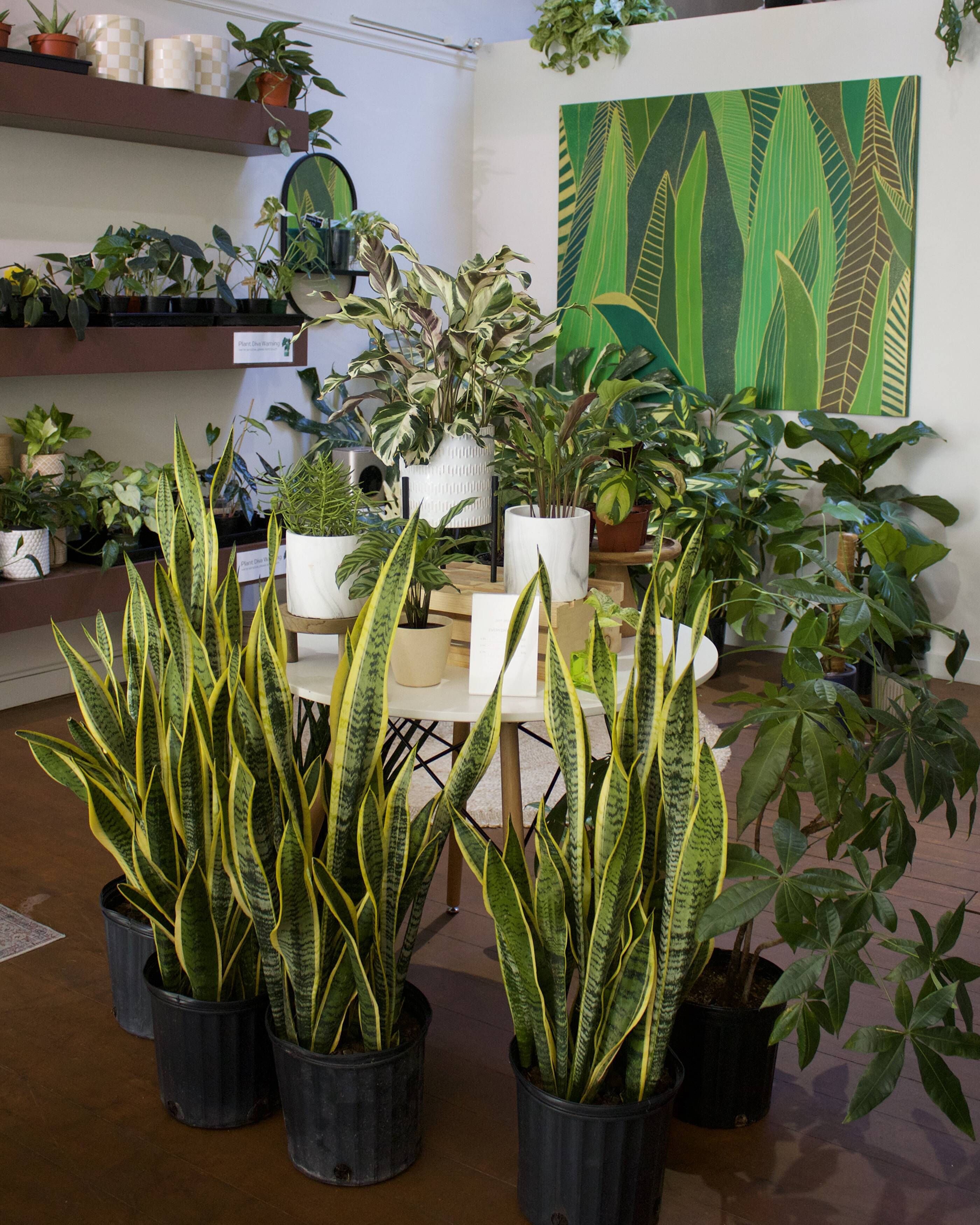
There’s nothing quite as rewarding as watching your houseplants grow big and lush. But if your plant is looking a little stretched out, faded, or stunted, the problem isn't always watering or fertilizer-it's usually light! Light is your plant's food, and providing the right amount is the single most important factor for success. At Over Grown, we believe that understanding your home’s light is the first step to becoming a great plant parent. Let's dive into the most common types of indoor light and how to match them to your leafy companions!
Before we get into specific light levels, here are some universal strategies to help you find the perfect spot for your plants
- Know your windows: The direction your window faces dictates the intensity and duration of light throughout the day (e.g., South = brightest, North = softest).
- Rotate your plants: To ensure even, symmetrical growth, gently rotate your plants a quarter turn every time you water them. Plants naturally grow toward the light source!
- Clean those leaves: Dust on leaves can block light absorption, essentially starving your plant. Wipe down foliage regularly to maximize the light your plant receives.
Light is categorized by its intensity and duration. Matching the plant to the intensity of your space is the key to thriving houseplants.
Direct Sunlight
How to Identify: This is unfiltered, intense light that shines directly onto the foliage for several hours a day.
- Location: Typically found in a window facing South or an unobstructed West window in the afternoon.
- Shadow: Sharp and clearly defined. You can feel the heat radiating from the light source.
Treatment:
- This lighting is most suitable for “desert-like” plants..
- If your plant is becoming faded or bleached in appearance, this might be a sign of too much light.
- Plants that thrive here: Cacti and Succulents.
Bright Indirect Light (The Sweet Spot)
How to Identify: This is the ideal condition for most tropical houseplants. The light is abundant but is filtered or scattered before it hits the leaves.
- Location: A few feet back from a South-facing window, or near an East or West-facing window.
- Shadow: Soft, fuzzy, or indistinct.
Treatment:
- This is the best light for encouraging fast and lush growth for most tropicals.
- If your plant is stretching or "reaching" for light, it needs to be moved closer to this type of light source.
- Plants that thrive here: Monstera, Fiddle Leaf Fig, Pilea Peperomioides, Bird of Paradise.
Medium/Filtered Light
How to Identify: A step down from bright indirect light. The light is present but lacks intensity.
- Location: Next to a window covered by a sheer curtain, or in the center of a room with large windows.
- Shadow: Very faint or barely visible.
Treatment:
- Plants here will generally maintain their size but grow much slower than they would in bright indirect light.
- If a plant that needs brighter light (like a Fiddle Leaf Fig) is placed here, it may drop leaves or look dull.
- Plants that tolerate here: Pothos, Dracaena, and Calatheas.
Low Light
How to Identify: This is the lowest amount of light a plant needs to survive. Low light does not mean no light!
- Location: Deep, shadowy corners far from windows, or next to a small North-facing window.
- Shadow: No discernible shadow can be cast with your hand.
Treatment:
- Plants in this area must be watered very sparingly, as their metabolic rate is extremely slow. Overwatering is the biggest killer in low light.
- Rotate these plants regularly, as they will aggressively lean toward the nearest light source.
- Plants that Tolerate Here: ZZ Plants and Snake Plants.
Understanding how light changes throughout your space is crucial for plant health. By learning to read your shadows and adjust plant placement, you can unlock the full potential of your collection!
If you are unsure whether your plant is getting too much or too little light, stop by! We are here to help you determine the perfect spot for your greenery.