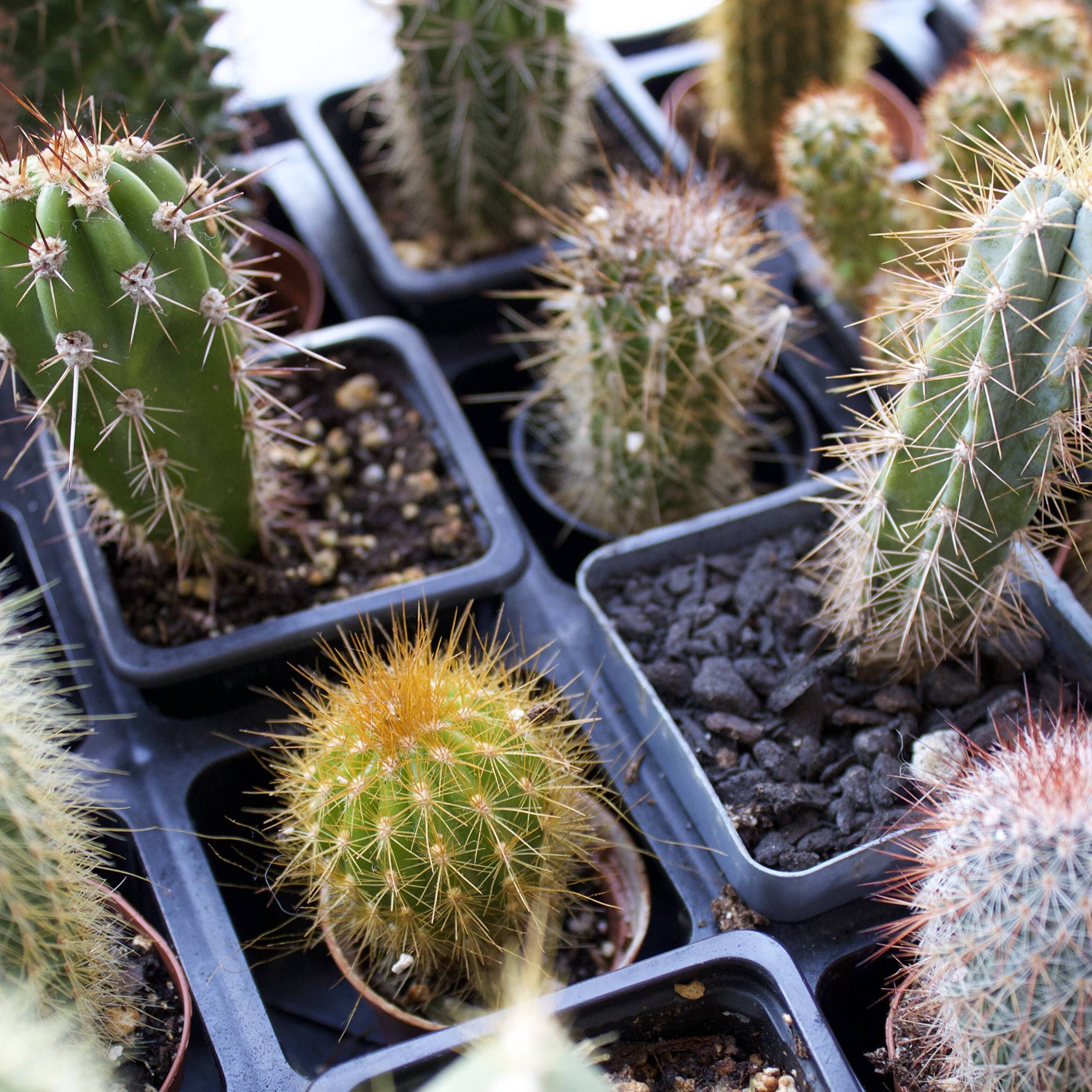
Cacti are the ultimate sun-lovers in the plant world, known for their geometric shapes, unique textures, and their easy care. While they are often labeled as "unkillable," these plants have specific needs that differ quite a bit from your typical tropical foliage. Cacti bring a structural, modern vibe to any sunny windowsill.
At Over Grown, we love cacti for their low-maintenance nature and their beautiful (though occasional) blooms. They are the perfect choice for the busy plant parent or anyone with a very bright spot that needs a touch of the green!
Cactus Lighting
If there is one thing a cactus craves more than anything else, it’s light. These are not plants for the dark corners of your home!
- Ideal light conditions: Most cacti need at least 6 hours of direct sunlight a day. A south or west-facing window is usually the best spot for them.
- The Outdoors: If you have a porch or balcony, many cacti love spending the summer outdoors. Just be sure to transition them slowly so they don't get sunburned from the sudden change.
- Avoid: Low-light areas like bathrooms or hallways. Without enough light, a cactus will begin to stretch out and become thin, pale, and weak as it searches for the sun. Eventually, it will die off in these conditions.
- Signs of improper light: If your round cactus starts looking like a pointed teardrop at the top, it’s stretching for more light. On the other hand, if one side of the plant turns yellow or orange and feels soft, it may be getting too much intense heat through a window (not common in most homes around Columbus).
Cactus Watering
The biggest threat to a cactus isn't a lack of water, it’s too much of it. They are designed to store water for long periods of drought. After all, they are desert plants.
- How often to water: During the spring and summer, water thoroughly only when the soil is 100% dry. In the winter, when the plant goes dormant, you can often go several weeks or even months without watering at all.
- The "Soak and Dry" method: When you do water, soak the soil until water runs out the drainage hole, then let it dry out completely. Never give a cactus tiny sips of water at a time.
- Avoid: Never water a cactus if the soil still feels even slightly damp. Standing water is the fastest way to cause root rot, which is often fatal for cacti.
- Signs of improper watering: A shriveled or wrinkled appearance usually means the plant is thirsty. A mushy, darkened base is a sign of overwatering and rot.
Cactus Soil and Fertilization
Standard potting soil holds far too much moisture for a cactus. They need a gritty, sandy medium that mimics the desert floor.
- Potting medium: A specialized cactus and succulent mix is a must. Our go-to in-store recommendation is Rosy Soil’s Cactus and Succulent blend. Check out our blog “All About Rosy” to learn more.
- Fertilizing: Cacti are slow growers and don't need much help, but a little food in the spring can encourage growth and flowering. Use a balanced fertilizer diluted to half-strength when you water in the Spring and Summer. Our in-store liquid fertilizer drops are an easy way to provide consistent nutrition.
Cactus Humidity & Leaf Care
Cacti prefer the air to be as dry as possible.
- Humidity: Most cacti thrive in the dry air of a typical home. Avoid keeping desert cacti in high-humidity areas, as this can lead to fungal issues.
- Cleaning: Dust can settle between the ribs and spines of a cactus. Use a soft, dry brush or a can of compressed air to gently blow away dust without poking your fingers!
Cactus Pests and Treatment
Cacti are fairly pest-resistant, but they aren't completely immune to the occasional intruder.
- Common Pests: Mealybugs are the most frequent culprits, they look like small bits of white fluff tucked between the ribs or spines. Scale can also appear as hard, tan bumps on the skin of the plant.
- Treatment: If you spot pests, isolate the plant immediately and wipe down all affected areas. Using a Q-Tip can be helpful to get around all the spikes. Use our Plant Protect Spray for a thorough treatment to ensure the plant stays healthy. For more tips, see our blog “Identifying & Treating Houseplant Pests.”
Cacti move slowly, so if you notice a problem, you usually have some time to fix it!
The Plant is Leaning
- Causes: The cactus is likely growing toward the light source.
- Solutions: Rotate your cactus 90 degrees every few weeks to ensure it grows straight and even.
Soft, Discolored Base (Rot)
- Causes: This is almost always due to overwatering or soil that doesn't drain well enough.
- Solutions: If the rot is at the very base, you may be able to "save" the plant by cutting off the healthy top part, letting it "callous" over for a week, and then replanting it in fresh soil.
White, Fuzzy Spots
- Causes: If the spots look like cotton, it's likely Mealybugs. If the plant naturally has fuzzy "areoles" (the spots where spines grow), that's just part of its anatomy!
- Solutions: Compare your plant to photos of the same species. If the fuzz moves or appears in new places, treat for pests.
How to keep your desert gems thriving:
- Lighting: Give them the sunniest spot in your house.
- Watering: When in doubt, don't water. Let the soil dry out completely.
- Soil: Use a gritty, fast-draining mix to keep the roots dry and happy.
Stop by Over Grown to see our current collection of prickly friends! Whether you want a tiny desk plant or a large statement piece, we have the perfect cactus for you.
We hope this guide helps your cacti stay sharp and healthy! For more expert advice and exclusive content, sign up for our newsletter below.