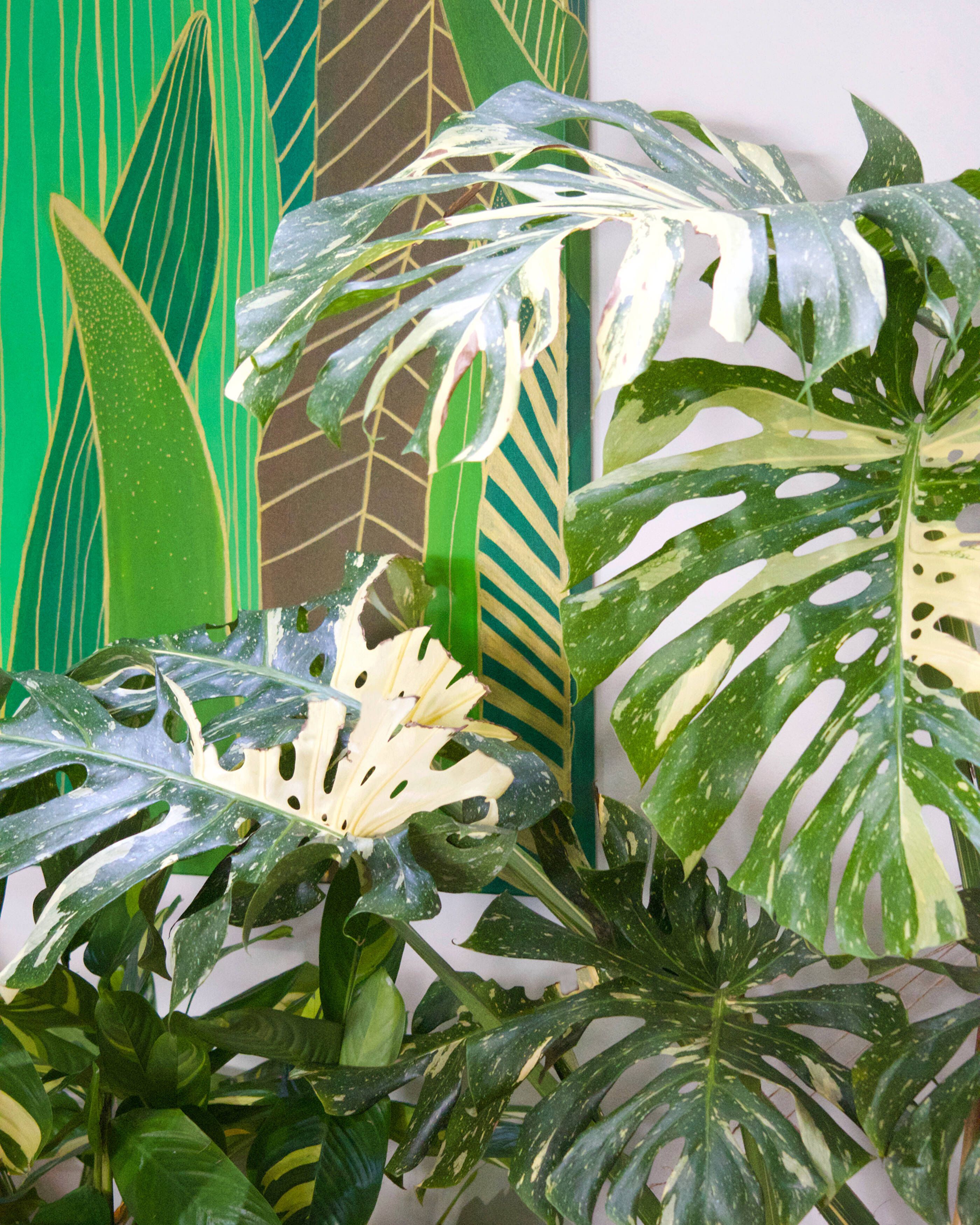
Monsteras are well loved, tropical houseplants. These stunning plants are native to the tropical forests of Central and South America, where they grow as large, climbing vines. Their iconic foliage and relatively easy-going nature make them a favorite among both novice and experienced plant parents. While they can grow quite large over time, proper Monstera care will ensure a beautiful, lush specimen in your home. Monsteras belong to the Araceae family and encompass many popular varieties such as the Monstera deliciosa and the smaller Monstera adansonii (swiss cheese plant). Despite their varying sizes and leaf characteristics, the core care requirements for optimal growth remain consistent. At Over Grown, we carry a fantastic selection of Monsteras, let us help you find the one that will transform your space!
Monstera Lighting:
As understory plants in their native jungle habitat, Monsteras receive bright, but filtered light. Replicating this is key to robust growth and proper fenestration.
- Ideal light conditions: Provide bright, indirect light. Several feet back from an east or west-facing window, is often perfect.
- Avoid: Direct, harsh sunlight can easily scorch the leaves, leading to yellow or brown patches.
- Signs of improper light: Too little light can result in smaller leaves, a lack of new fenestrations, and "stretching". Too much light can cause yellowing and crisping of the leaves.
Monstera Watering:
Monsteras prefer consistent moisture but are susceptible to root rot if left in soggy soil.
- How often to water your Monstera: Water thoroughly when the top few inches of soil feel dry to the touch. Frequency depends on light, temperature, and pot size, but usually ranges every 7-14 days.
- Drainage is crucial: Always use a pot with proper drainage holes to ensure excess water can escape. Never let your Monstera sit in standing water.
Monstera Humidity and Support:
Monsteras appreciate higher humidity, which contributes to healthy, large leaves. As climbing vines, they also need support as they mature.
- Methods to increase humidity: Placing the plant near a humidifier will be appreciated. Grouping your Monstera with other plants can also create a beneficial microclimate.
- Providing support: As the plant grows, it needs something to climb. A moss pole or sturdy trellis is highly recommended to encourage larger leaf size and proper upright growth.
Monstera Soil and Fertilization
Monsteras need a chunky, well-aerated potting mix that allows for good drainage while still retaining some moisture.
- Recommended mix: A mix of standard indoor potting soil, orchid bark, and perlite works well. We highly recommend checking out our Aroid Mix in-stores, which is specifically formulated for plants like Monsteras.
- Repotting: Repot every 1-2 years, or when the plant becomes root-bound, usually in the spring.
- Fertilizing: During the growing season (spring and summer), you can apply a diluted, balanced liquid fertilizer around every 4 weeks. You can reduce fertilization during fall and winter. For a simple way to feed your plant, check out our liquid fertilizer drops. They're available in-store and online, they are perfect for consistent, healthy growth.
Monstera Yellowing Leaves:
Yellowing leaves can be a sign of several issues, often related to watering.
- Causes: The most common causes are overwatering (leading to root rot) or underwatering (old leaves are sacrificed to conserve water). Yellowing of the oldest, lowest leaves is often natural as the plant grows.
- Solutions: Check the soil moisture. If soggy, allow it to dry out and adjust your watering schedule. If bone dry, water thoroughly. Ensure good drainage.
Monstera Browning Tips or Edges:
Dry, crispy brown patches can be unsightly and indicate environmental stress.
- Causes: Typically caused by low humidity or a buildup of salts/minerals from tap water and fertilizer.
- Solutions: Increase humidity near the plant. If using tap water, switch to distilled, filtered, or rainwater. Flush the soil periodically by watering until water flows freely from the drainage holes.
Monstera Pests and Treatment:
Though generally resilient, Monsteras can occasionally suffer from infestations.
- Common Monstera pests: Keep an eye out for thrips (tiny, slender black bugs often leaving silvery streaks on leaves) and spider mites (indicated by fine webbing and speckling).
- Treatment: For minor infestations, wipe down leaves with a damp cloth or cotton swab dipped in rubbing alcohol. Treat with an insecticidal soap or neem oil solution. Our Organic Pest Control Spray is available in-store and online, it is a safe, effective way to treat and prevent future outbreaks. For more on pest identification and treatment, visit our blog, ‘Identifying & Treating Houseplant Pests.’
Still struggling to figure out what's wrong with your plant? Sometimes a little expert guidance makes all the difference. Stop by Over Grown for a plant consultation, and we'll help get your plant back on track.
Key recommendations for new Monstera owners:
- Lighting: Bright, indirect light is best.
- Watering: Let the top few inches of soil dry out between waterings.
- Support: Provide a moss pole or trellis as the plant matures.
- Patience: Fenestrations (the iconic splits) only appear on mature leaves, so be patient with younger plants!
As always, our expert in-store staff is ready to offer personalized advice and troubleshooting for your beautiful aroids.
We hope this guide helps your Monsteras flourish and grow into a gorgeous statement plant! Don't forget to sign up for the Over Grown newsletter below for more exclusive plant care content, tips, and community news.