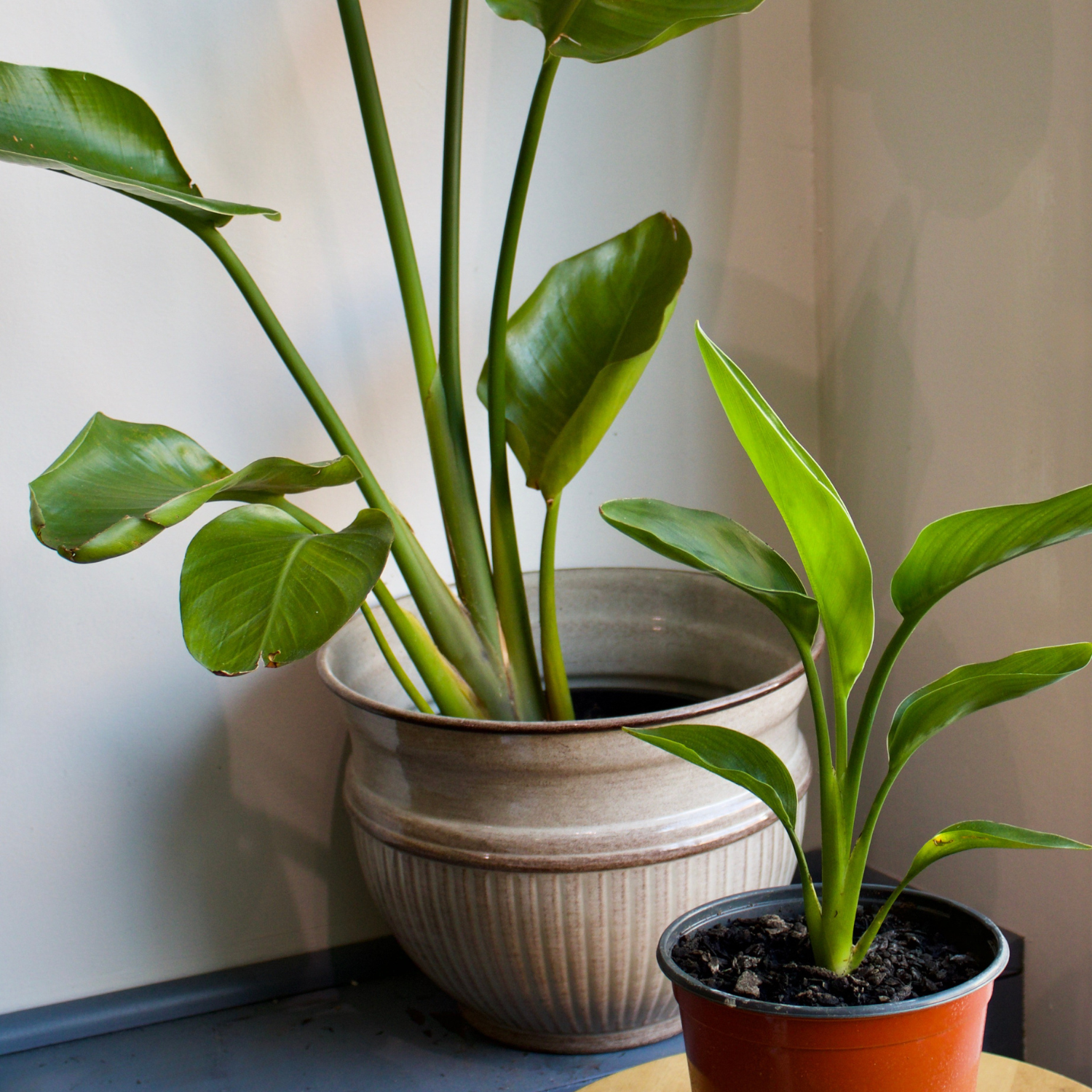
The Bird of Paradise is the ultimate statement plant. Named for its spectacular flowers that resemble the head of a tropical crane, it is most commonly grown indoors for its massive, waxy, banana-like leaves. These plants are the ultimate way to bring a bold, "jungle" feel to a sun-drenched corner.
At Over Grown, we love the Bird of Paradise for its sheer presence. It is a vigorous grower that rewards plenty of light and space with lush growth that feels like a piece of the tropics right in your living room.
Bird of Paradise Lighting
Because they are native to South Africa, these plants are true sun-seekers and require more light than your average indoor foliage.
- Ideal light conditions: Bright, direct to indirect light is essential. They thrive in south or west-facing windows where they can soak up several hours of sun each day.
- The growth: Without enough light, the Bird of Paradise will grow slowly, its stems may become weak and floppy, and it will likely never produce its iconic flowers.
- Avoid: Low-light areas or dark corners. While it may survive for a while, it will eventually decline and lose its structural beauty.
- Signs of improper light: If the new leaves are significantly smaller than the old ones or if the plant is leaning heavily toward the nearest window, it is asking for more light.
Bird of Paradise Watering
For such a large plant, the Bird of Paradise has a relatively straightforward watering routine, provided its environment is bright.
- How often to water: Water thoroughly when the top 75% of the soil feels dry. During the spring and summer, you may find it is more thirsty and drying faster, especially with the brighter light these seasons bring. While in the winter, you can let it dry out a bit more.
- Check the soil: Use your finger or a moisture meter to check deep into the pot. Because they have thick, fleshy roots, they can handle a short period of dryness but don't like to sit bone dry.
- Avoid: Chronic overwatering or letting the plant sit in a saucer of standing water. This can lead to root rot, which often shows up as browning at the base of the stems.
- Signs of improper watering: If the leaves are curling inward, the plant is likely thirsty. If the leaves are turning yellow and the stems feel soft, it may be getting too much water.
Bird of Paradise Soil and Fertilization
A heavy-duty plant needs a high-quality soil that provides both stability and excellent drainage.
- Potting medium: A rich, well-draining potting mix is vital. We use and recommend Rosy Soil’s Aroid mix which is nice and chunky and available in-store! It offers the organic matter and aeration these large plants need to thrive. Check out our blog “All About Rosy” to learn more.
- Fertilizing: Because they grow so vigorously in the summer, they are heavy feeders. Apply a balanced liquid fertilizer every couple weeks during the spring and summer. Our liquid fertilizer drops are a great way to keep your Bird of Paradise fueled and flourishing.
Bird of Paradise Humidity & Leaf Care
While they are relatively adaptable to home humidity, their large leaves look much better with a little extra moisture.
- Methods to increase humidity: They appreciate humidity around 50% or higher. A nearby humidifier can help the new leaves unfurl more easily and keep the edges from becoming crispy. For more humidity tips, check out our blog, “Humidity 101”.
- Clean the foliage: Those giant leaves are massive dust collectors! Wipe them down with a damp cloth every few weeks. This keeps the plant looking polished and ensures it can absorb as much light as possible.
Bird of Paradise Pests and Treatment
Like most large-leafed tropicals, the Bird of Paradise can occasionally attract a few common hitchhikers.
- Common Pests: Watch for Mealybugs in the crevices where the leaves meet the stems, or Spider Mites on the undersides of the leaves if the air is very dry.
- Treatment: Isolate the plant and wipe down the affected areas. We recommend using our Plant Protect Spray to treat the entire plant and ensure it stays pest-free. For more help, visit our blog, “Identifying & Treating Houseplant Pests.”
Most Bird of Paradise issues are related to their transition into the home environment or their need for high light.
Split Leaves
- Causes: This is actually a natural adaptation! In the wild, the leaves split to allow wind to pass through without tearing the whole plant out of the ground.
- Solutions: Don't worry, it’s not a sign of poor health. If you prefer to keep the leaves more pristine, avoid placing the plant in high-traffic areas where it might be bumped.
New Leaf "Stuck" in the Stem
- Causes: Often caused by low humidity or inconsistent watering.
- Solutions: Increase humidity around the plant and ensure you are watering as soon as the top ⅔ of the soil is dry. While consistently misting plants is not recommended, you can very gently mist the emerging leaf to help it slide out in this situation.
Brown, Crispy Leaf Edges
- Causes: Usually a sign of dry air or underwatering.
- Solutions: Consistent watering and a humidity boost will usually resolve this. You can trim away the crispy edges with clean scissors if they bother you.
How to keep your tropical statement plant thriving:
- Lighting: Give it the brightest spot you have, it loves the sun!
- Watering: Let the top of the soil dry out before soaking it thoroughly.
- Space: Give it room to grow, these plants love to expand!
Stop by the shop to see our current selection of Bird of Paradise and chat with our team about how to move one into your home.
We hope this guide helps your Bird of Paradise reach new heights! For more expert advice and community updates, sign up for our newsletter below.