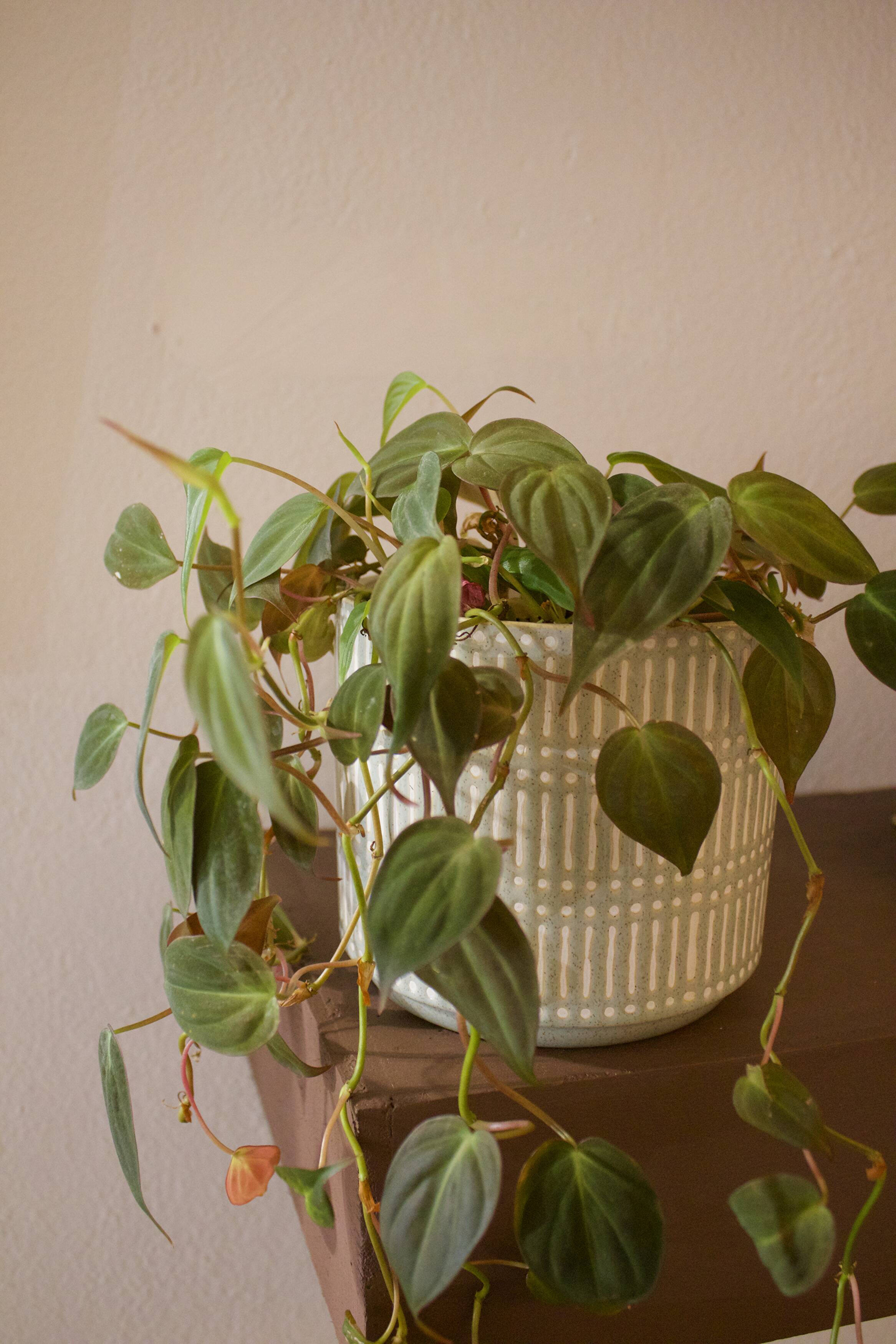
Pruning is the act of selectively trimming away parts of a plant, and sometimes this can feel intimidating. After all, you've probably worked really hard to get the growth you have seen. However, pruning is not just about aesthetics, it's a vital practice that promotes health, encourages fuller growth, and keeps your houseplants thriving for years to come. At Over Grown, we encourage all plant parents to trim their plants when it's needed! Let’s explore the essential reasons to prune and how to do it correctly.
Before you grab your tools, ensure you're set up for success and plant safety:
- Use clean, sharp tools: Always use clean scissors, pruners, or shears. Wiping them down with rubbing alcohol before use prevents the spread of pests or diseases between plants. Sharp tools make clean cuts, which heal faster.
- Prune in the growing season: The best time to prune is usually in spring or early summer when the plant is actively growing and can quickly recover. However, you can remove dead or yellow leaves year-round.
- Know your tools: We carry a selection of small, sharp pruners designed for delicate houseplant work, which you can find in our stores!
Pruning is essential for both the immediate health and the long-term shape of your plant.
Encourage Bushier Growth
Many vining or stem-growing plants, like Pothos, Philodendrons, and Basil, can get long and "leggy", meaning they have long stems with leaves only at the ends.
How pruning helps: When you remove the main stem's growing tip (the node), you stop the flow of growth hormones to that spot. This redirects the plant's energy to the lateral buds further down the stem, which then sprout, resulting in a fuller, bushier plant. You can then also propagate cuttings you trim off! To learn more about propagating your plants, visit our blog post, "Propagation 101".
Remove Dead or Dying Foliage
Leaves that are yellow, brown, or crispy are no longer producing energy for the plant; they are only consuming it.
How pruning helps: Removing this "spent" material allows the plant to focus its resources on healthy growth points, ensuring energy is not wasted on parts that are already on the way out. Plus, decaying material can attract pests and is not aesthetically pleasing to the eye when styling plants in your home.
Maintain Desired Size and Shape
Plants will grow to fill the space they are given. Pruning allows you to control their shape and keep them from taking over your room.
How pruning helps: A strategic trim can keep a bushy plant compact or direct a vining plant to grow the way you want it. This is especially helpful for small spaces or preventing a plant from becoming top-heavy.
Rejuvenate an Old Plant
Over time, some plants can become sparse, woody, or simply overgrown.
How pruning helps: A severe, strategic prune (known as "hard pruning") can shock the plant into producing robust new growth from the base, essentially hitting the reset button on a struggling specimen.
Removing Dead or Yellow Leaves
- Locate the base: Find the point where the damaged leaf stem meets the main stem or the soil.
- Cut: Snip the stem as close as possible to the main stalk or base. You want to avoid leaving little stubs that can rot.
Pruning for Bushiness
- Locate a node: Look along the stem for a "node", the slightly raised bump where a leaf either grows or used to grow. This is where new growth will emerge.
- Make the cut: Make a clean cut above a healthy node.
- Result: The remaining stem will sprout new growth from that node, creating two new branches where there was once only one, this will create a fuller look!
Key recommendations for successful pruning
- Tools: Use clean, sharp shears or scissors to make clean cuts.
- Timing: Prune during the spring or early summer growing season for quick recovery.
- Bushiness: To encourage fullness, cut just above a leaf node.
- Health: Always remove dead, yellow, or damaged foliage to redirect energy.
Sometimes, it can be intimidating to make that first cut, or you might be unsure about the best way to shape your specific plant. As always, our in-store employees are always available to provide personalized guidance and assistance with your plant care questions. For more essential plant care tips, check out our ‘How to Properly Water Your Houseplants’ guide!
We hope this guide helps you feel confident when pruning your plants! If you're looking for more expert advice, exclusive content, and a community of fellow plant lovers, be sure to sign up for the Over Grown newsletter below.