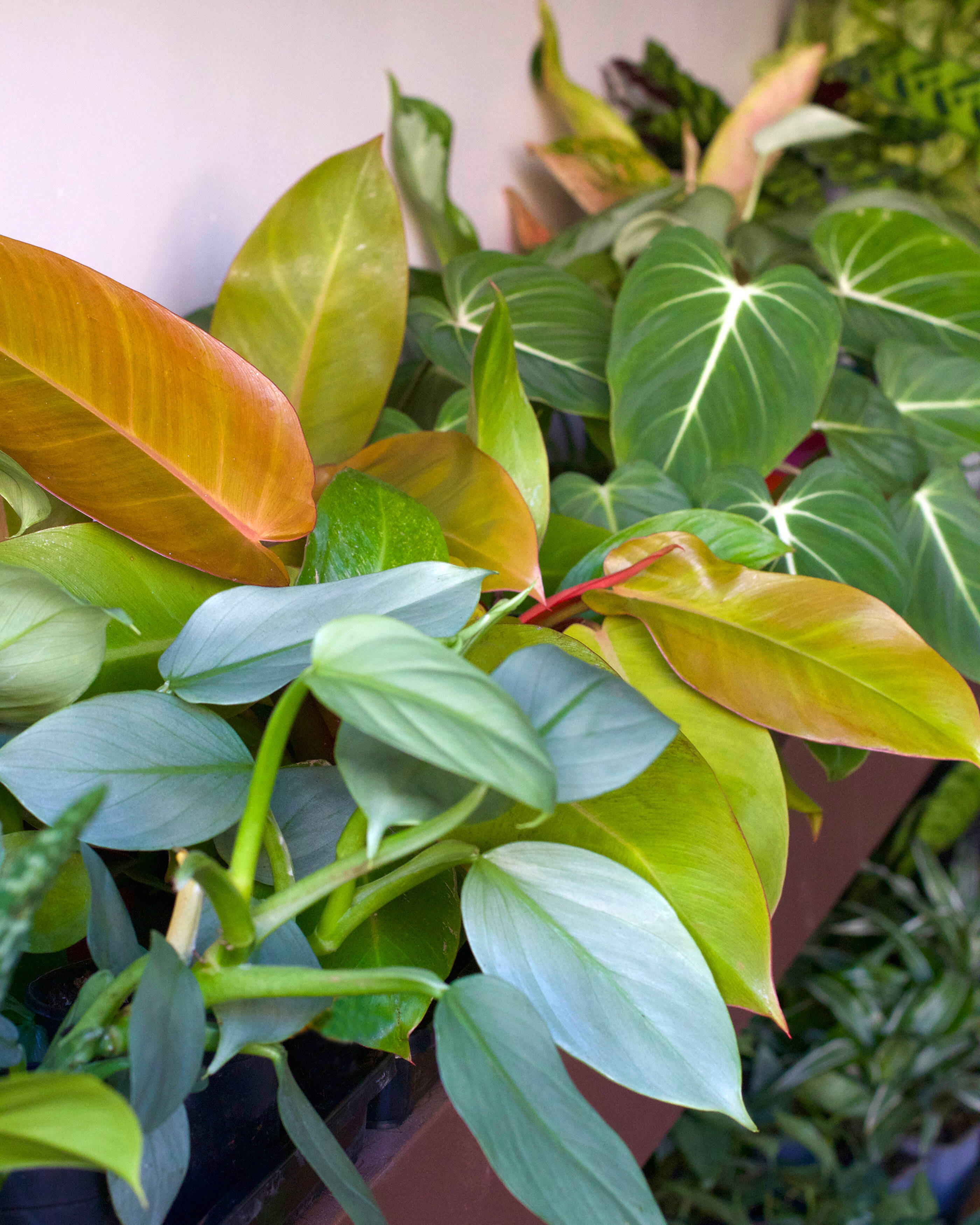
Philodendrons are a diverse and beloved group of plants, celebrated for their stunning foliage and adaptability. There is truly a look for everyone in this genus! These plants are known for their ease of care, making them an excellent choice for both new and experienced plant parents. With a wide range of types, from vining to upright varieties, Philodendrons share common care requirements that ensure they thrive in your indoor space. At Over Grown, we offer a beautiful selection of Philodendrons, and our team is always ready to help you find the perfect one for your collection.
Philodendron Lighting
Originating from the tropical rainforests of Central and South America, Philodendrons thrive in conditions that mimic their natural habitat.
- Ideal light conditions: Provide bright, indirect light. An east-facing window or a spot several feet away from a south or west-facing window is often ideal.
- Avoid: Direct sunlight can scorch the leaves and cause them to yellow. Insufficient light can lead to leggy growth with small, widely spaced leaves.
- Signs of improper light: Yellowing leaves can indicate too much light, while a lack of new growth or very small leaves can signal too little light.
Philodendron Watering
Philodendrons appreciate consistent moisture but are also susceptible to root rot if overwatered.
- How often to water: Water when the top couple inches of soil feel dry. The frequency will depend on factors like light, temperature, and humidity, but it is typically every 7-10 days.
- Signs of improper watering: Wilting or drooping leaves can indicate underwatering, while yellowing leaves can be a sign of overwatering.
- Our tip: For the best results, use a pot with a drainage hole to allow excess water to escape and prevent the roots from sitting in soggy soil.
Philodendron Humidity
While Philodendrons are more forgiving about humidity than some other tropical plants, they do appreciate higher levels.
- Methods to increase humidity: The best recommendation would be to have a humidifier close-by your collection. Position it to benefit the plant without constantly wetting the leaves. Another method would be to group plants together. Plants release moisture, creating a localized humid climate when grouped.
- Avoid: While misting can provide a temporary boost, it doesn't significantly increase humidity and can sometimes lead to fungal issues on the leaves.
Philodendron Soil and Fertilization
A well-draining, chunky soil mix is best for Philodendrons. This type of mix allows for good aeration while still retaining enough moisture for the plant's roots.
- Potting medium: A well-draining, chunky soil mix is best for Philodendrons. This type of mix allows for good aeration while still retaining enough moisture for the plant's roots. We use and recommend Rosy Soil's Houseplant mix for our Philodendrons, which can be found in-stores. Check out our blog 'All About Rosy' to learn more about Rosy Soil. It is also recommended to use a pot with proper drainage, to allow water to drain through and not cause rot root to the plant.
- Fertilizing: During the growing season (spring and summer), you can apply a diluted, balanced liquid fertilizer around every 4 weeks. You can reduce fertilization during fall and winter. For a simple way to feed your plant, check out our liquid fertilizer drops! They're available in-store and are perfect for consistent, healthy growth.
Supporting Your Philodendron's Growth
Philodendrons have versatile growth habits. While many are happy to trail gracefully from a hanging basket, they are naturally climbers in their native rainforests. Understanding these growth patterns is key to helping your plant thrive and reach its full potential.
- Trailing: Letting the vines hang freely is a popular way to display many varieties, like the classic Heartleaf Philodendron. This is a great, low-maintenance option that showcases the plant’s lush, cascading foliage.
- Climbing: In the wild, many philodendrons climb trees, and you can mimic this behavior in your home. Providing a vertical structure like a moss pole encourages the plant to grow upwards, often leading to significantly larger leaves and a more mature, impressive appearance.
- Crawling: Some varieties, like the Philodendron Gloriosum, have a terrestrial growth habit, meaning they crawl along the ground rather than trailing or climbing. These are best suited for wider, shallower pots that accommodate their spreading root system.
Philodendron Yellowing Leaves
- Causes: The most common cause is overwatering. Other factors can include too much direct light or nutrient deficiencies.
- Solutions: Adjust your watering schedule to let the soil dry out more between waterings. Move the plant to a spot with less direct sun if needed.
Philodendron Brown Leaf Tips or Edges
- Causes: This is often a sign of low humidity or inconsistent watering.
- Solutions: Increase the humidity around your plant using one of the methods mentioned above and try to maintain a more consistent watering schedule.
Philodendron Pests and Treatment
- Common Philodendron pests: Look out for spider mites (fine webbing on leaves), mealybugs (small, white, cottony masses), and aphids (tiny green or black insects on new growth).
- Treatment: For infestations, wipe leaves with a damp cloth and apply insecticidal soap. We recommend our organic pest treatment that you can find in either of our store locations to keep infestations at bay and prevent future outbreaks.
To learn more about houseplant pests, visit our blog, Identifying and Treating Houseplant Pests. Still struggling to figure out what's wrong with your plant? Sometimes a little expert guidance makes all the difference. Stop by Over Grown for a plant consultation, and we'll help get your plant back on track.
Key recommendations for new Philodendron owners:
- Lighting: Bright, indirect light is best. Avoid direct sun.
- Watering: Water when the top couple inches of soil are dry.
- Humidity: They appreciate higher humidity but are quite adaptable.
As always, our in-store employees are always available to provide personalized guidance and assistance with your plant care questions.
We hope this guide helps your Philodendrons thrive! If you're looking for more expert advice, exclusive content, and a community of fellow plant lovers, be sure to sign up for the Over Grown newsletter below.