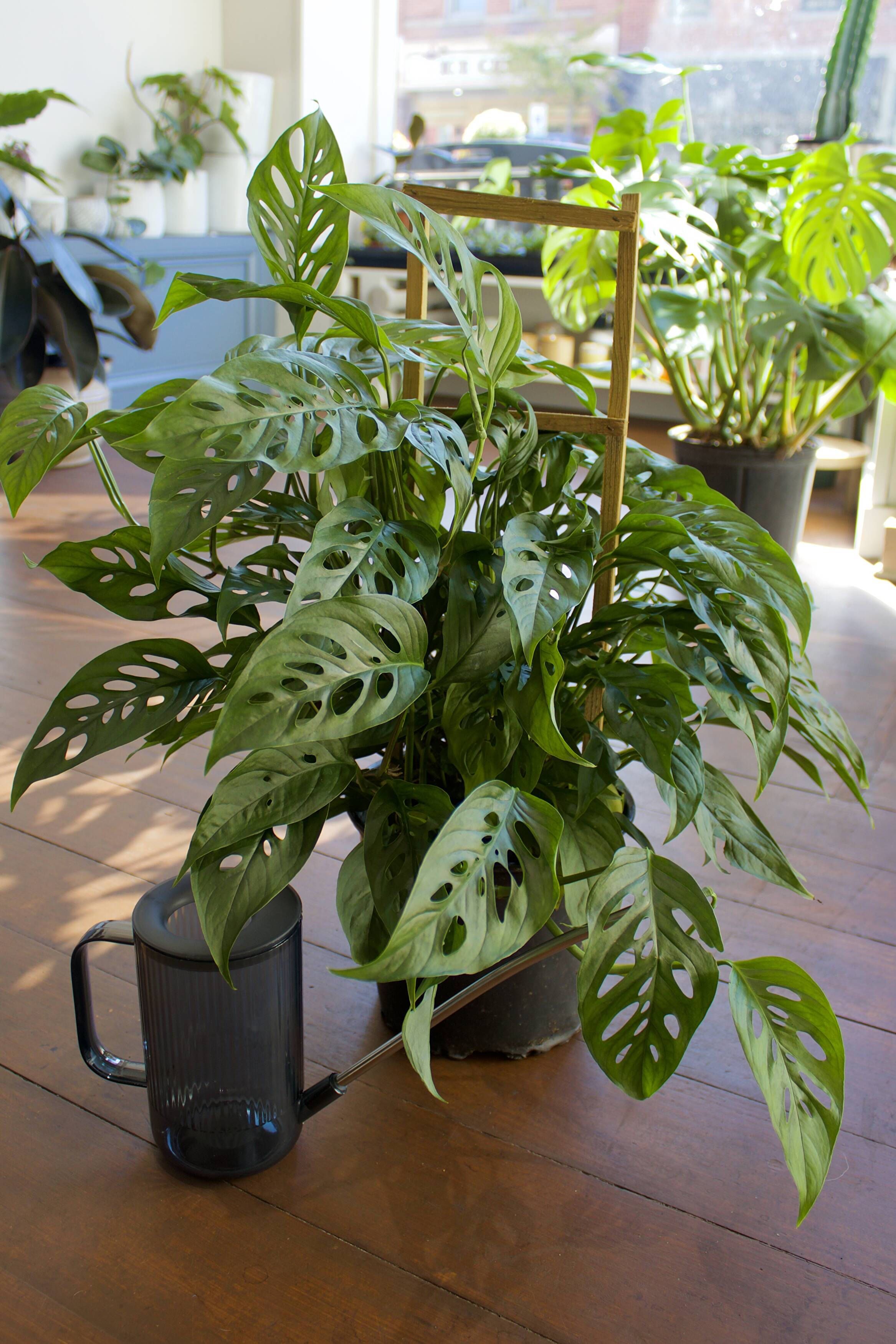
Watering is arguably the most crucial aspect of houseplant care. Too much, and you drown them… too little, and they dry out. Finding that sweet spot is the key to a happy, thriving plant collection. At Over Grown, we want to take the guesswork out of watering so you can stop stressing and start enjoying your plants. Let's dive into the core principles of proper houseplant hydration!
Before we get to the specifics, here are some universal strategies that will keep your watering routine on track:
- Don't follow a schedule: Forget watering every Tuesday. Plants are living things, and their water needs change based on the season, temperature, humidity, and light exposure. Always check the soil first!
- Use the right water: Tap water is usually fine, but if you have heavily chlorinated or softened water, consider letting it sit out for 24 hours (to allow chlorine to dissipate). Some plants such as calatheas and alocasias, we do recommend using distilled water to prevent crispy edges on your leaves from the chemicals found in tap water.
- Water deeply: When you do water, soak the soil thoroughly until water runs out of the drainage holes. This encourages deep root growth. Always discard any excess water from the saucer!
The best method is always to check the soil. Here are two easy ways to tell if your plant is ready for a drink:
1. The Finger Test
This is the most reliable method and requires no tools, just your finger!
- Stick a finger in the soil: Depending on the size/depth of the pot, stick a finger a couple inches to feel if the soil is still moist or not. This allows you to determine if the soil is wet or dry, or somewhere in between. Based on that and the type of plant, you can then go from there on if you need to water or not!
2. The Lift Test
This works great once you get to know your plants.
- Before watering: Carefully lift the pot. Note how heavy it feels when the soil is dry.
- After watering: Lift the pot again. Note how heavy it is when saturated.
- The check: If the pot feels light when you lift it, it’s a sure sign the water is gone, and it’s time to water again.
Your plants’ watering needs change dramatically between summer and winter.
- Spring & Summer (Growing Season): Plants are actively growing and need more energy and water. You will likely be watering more frequently.
- Fall & Winter (Dormancy): Growth slows down significantly. Plants use much less water, and light levels are lower. Reduce your watering frequency to prevent root rot.
- Little sips: Giving a plant just a tiny bit of water at the surface encourages shallow roots that are prone to drying out. Always water until it drains out the bottom.
- Letting them sit in water: Leaving your plant sitting in a saucer full of water is a fast track to root rot. Dump the excess water after an hour.
- Spraying/misting the soil: Misting only increases humidity for a few minutes and does not actually hydrate the plant's roots. Water the soil, not the leaves!
Sometimes, it can be tricky to tell if your plant is thirsty or overwatered, as the symptoms (drooping, yellowing leaves) can look similar. Don't worry, we are here to help and would love to help you determine if you are watering too much or too little, as well as help you get into a healthy watering routine!
If you're looking for more expert advice, exclusive content, and a community of fellow plant lovers, be sure to sign up for the Over Grown newsletter below.