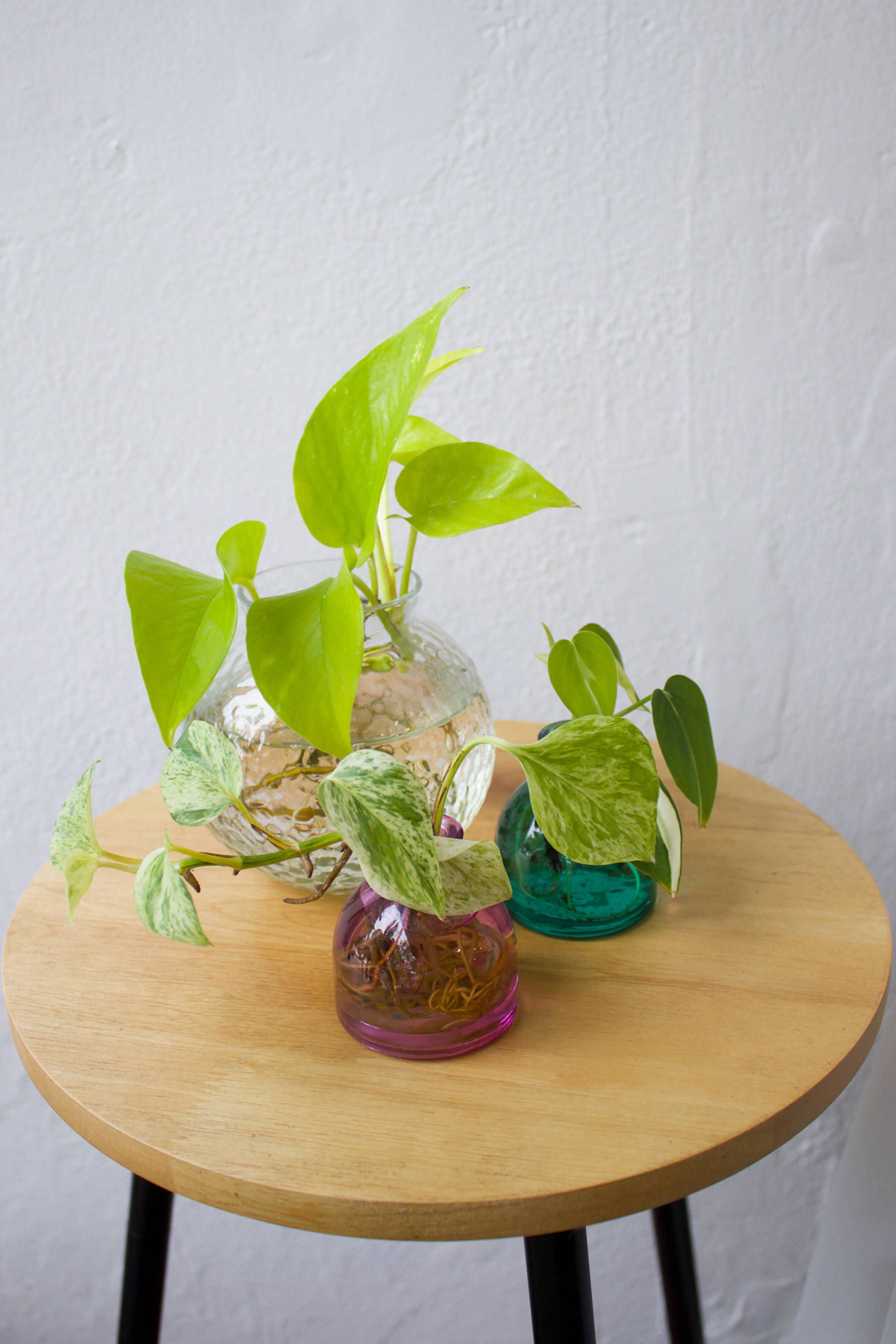
Propagation is a rewarding and exciting part of plant care. It's the process of creating new plants from a single parent plant, and it's a fantastic way to expand your collection, share with friends, or simply save a plant that's not doing so well. While it might sound intimidating, with a little know-how, you'll be a propagation pro in no time. This guide will walk you through the basics of propagating some of the most common houseplants!
There are many reasons to try your hand at propagation!
- Grow your plant collection, it's the most cost-effective way to get more plants!
- Share the planty love! Propagating plants to give to friends and family is a wonderful gift.
- Rescue a plant. You can save an unhealthy or leggy plant by propagating healthy parts of it.
- It’s a fun, new project to try. It's a great way to learn more about your plants and watch new life begin.
Before you get started, gather a few basic supplies.
- A clean, sharp pair of pruners, scissors also work.
- A container for water, a jar or glass works well. This is also a fun way to reuse containers you may have.
- Optional: Rooting hormone (can speed up the process for some plants). Or a cloning paste which can be applied directly to the plant. We carry this in-stores if you’d like to give it a go!
There are a few different ways to propagate houseplants. The best method depends on the type of plant you have. Many methods require being able to identify nodes on the plant, but what is a node? It is the point on a plant's stem where leaves, branches, buds, or aerial roots emerge, often appearing as a small bump.
Water Propagation
This is one of the most popular and easiest methods for beginners. It allows you to watch the roots grow, which is very satisfying. Here’s how to do it!
- Choose a healthy stem with at least one or two nodes (the small bumps on the stem where leaves and roots grow).
- Cut the stem about half an inch below a node.
- Remove the leaves from the bottom of the cutting, making sure no leaves will be submerged in water.
- Place the cutting in a glass of water, ensuring at least one node is underwater.
- Add a drop of rubbing alcohol to prevent bacteria & build-up.
- Place the glass in a spot with bright, indirect light.
- Check the water every 3-5 days to ensure it is clean and oxygenated.
- Once the roots are a few inches long, it's time to pot the cutting into your potting medium of choice!
Some plants do well when you put the cutting directly into a soil mix, such as succulents and peperomias. Here’s how to do it!
- Choose a healthy leaf or stem from the parent plant.
- Allow the cut end to callus over for a few hours. This helps prevent rot.
- Place the callused end into a pot of well-draining soil. For succulents, you can just lay the leaf on top of the soil.
- Place the pot in a spot with bright, indirect light.
- Water the soil sparingly, or we recommend to use a spray bottle to keep the top of the soil slightly moist.
This method is perfect for plants that grow in “clumps”, such as a ZZ or calathea. It's a simple way to get a new plant and can also help rejuvenate a root-bound parent plant. Here’s how to do it!
- Gently remove the entire plant from its pot.
- Carefully untangle the roots and identify natural clumps or sections.
- Using your hands, divide the plant into smaller sections, making sure each section has a healthy portion of roots and stems.
- Repot the new smaller plants into their own pots with fresh soil. Just like that, you’ve doubled your plant!
- The cutting is rotting: This is often caused by bacteria. Make sure to use clean tools and change the water if you see any color in the water.
- The cutting isn't growing roots: Be patient! Some plants take longer than others. Ensure the cutting is in a warm, bright spot and that the water is fresh.
- The cutting isn't surviving the transfer to soil: This is a common problem known as "transplant shock." To prevent it, make sure the roots are well-established before potting and keep the soil consistently moist for the first few weeks.
Propagation is a fun experiment that teaches you a lot about your plants. Don't be discouraged if your first attempt isn't a success. With a little practice, you'll soon be surrounded by a flourishing collection of new plants.
As always, our in-store employees are available to provide personalized guidance and assistance. Stop in and ask any questions you may have about propagating your plants!
We hope this guide helps you start multiplying your plants! If you're looking for more expert advice, exclusive content, and a community of fellow plant lovers, be sure to sign up for the Over Grown newsletter below.