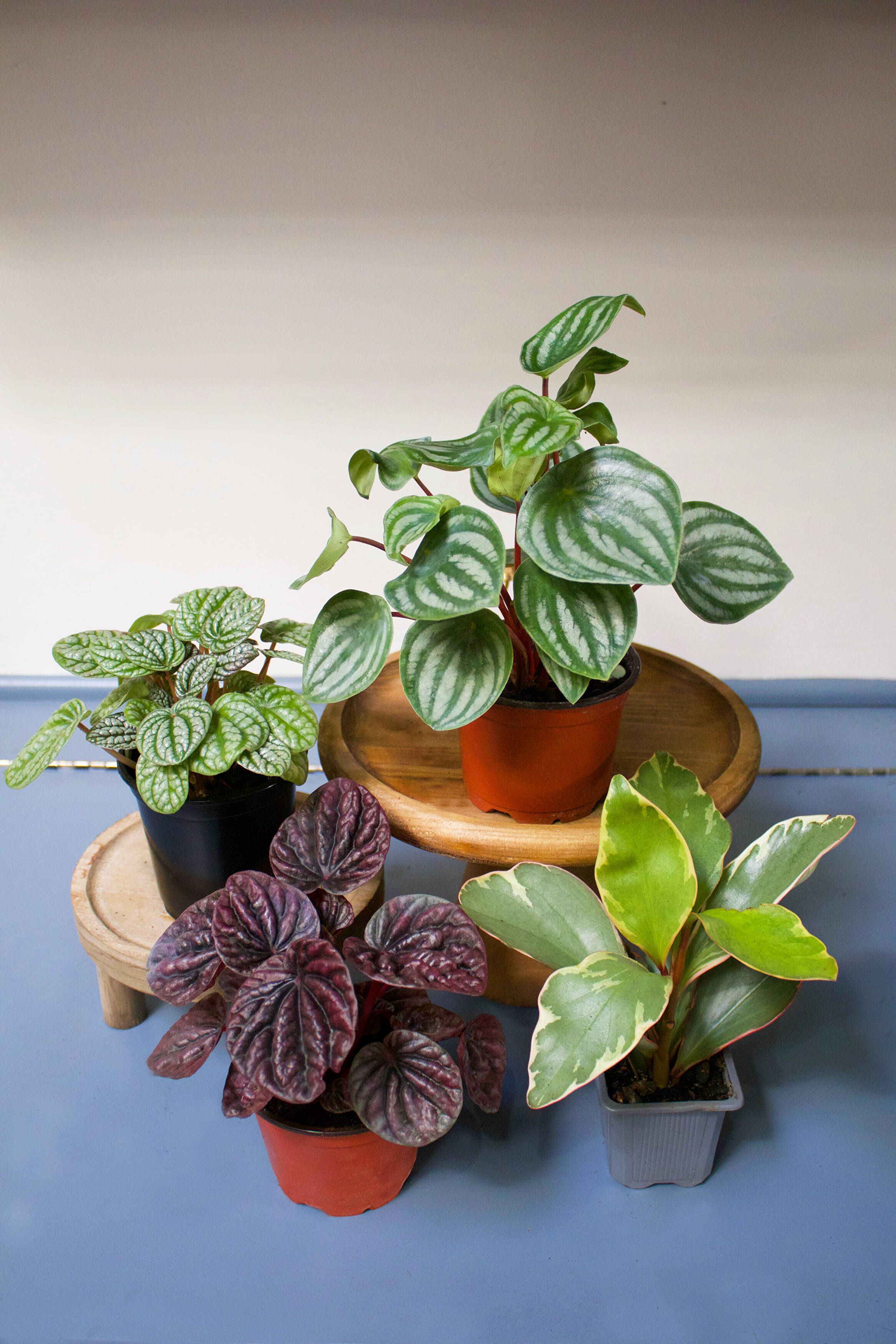
Peperomias are a beautifully diverse family celebrated for their striking foliage textures and colors. From the rippled leaves and striking markings, there is a variety to suit every aesthetic. These plants are known for their generally compact size and easy-going nature, making them a fantastic fit for desks, shelves, and smaller spaces. Additionally, Peperomias are non-toxic to cats and dogs, making them a highly suitable choice for households with pets. Despite their wildly diverse appearance, all Peperomias share common care requirements for optimal health and vibrant growth. At Over Grown, we have a stunning collection of unique Peperomia varieties, and our team is ready to help you find your new favorite.
Peperomia Lighting
In their native habitat, Peperomias grow beneath the canopy, receiving bright, filtered light.
- Ideal light conditions: Provide bright, indirect light. An east-facing window or a few feet away from a south/west-facing window is usually perfect.
- Avoid: Direct midday sunlight, which can scorch the leaves. Also, avoid deep shade, which will cause leggy growth and dull foliage.
- Signs of improper light: Insufficient light will result in small, widely-spaced leaves (leggy growth). Excessive light can cause dull, washed-out color.
Peperomia Watering
Watering is the most critical aspect of Peperomia care. Because their thick leaves and stems store water, they are highly susceptible to overwatering and root rot.
- How often to water: Treat them like semi-succulents. Allow the top 50-75% of the soil to completely dry out before watering again. This is typically less frequent than many other houseplants, often every 10-14 days.
- Check the leaves: The leaves can be a tell-tale sign-if they look slightly puckered or feel less firm than usual, the plant is ready for a drink.
- Avoid: Never let a Peperomia sit in soggy soil, as this is the fastest route to rot.
Peperomia Humidity
Peperomias are quite tolerant of average household humidity levels but will appreciate a boost if your home is particularly dry.
- Methods to increase humidity: While they don't require a humidifier like a Calathea, grouping them with other plants will create a nice humid microclimate.
- Avoid: Misting is generally unnecessary and can sometimes encourage fungal issues on their thick leaves.
Peperomia Soil and Fertilization
- Potting medium: A well-draining, airy mix that retains some moisture is essential. A standard indoor potting mix is suitable, but we use and recommend Rosy Soil's Houseplant, which can be found in-stores. Check out our blog 'All About Rosy' to learn more about Rosy Soil. It is also recommended to use a pot with proper drainage, to allow water to drain through and not cause rot root to the plant.
- Fertilizing: During the growing season (spring and summer), you can apply a diluted, balanced liquid fertilizer around every 4 weeks. You can reduce fertilization during fall and winter. For a simple way to feed your plant, check out our liquid fertilizer drops. They're available in-store and are perfect for consistent, healthy growth.
Yellowing Leaves or Sudden Leaf Drop
- Causes: The most frequent culprit is overwatering, which leads to root rot.
- Solutions: Adjust your watering schedule immediately to allow the soil to dry out more thoroughly between waterings. If severe, gently check the roots for mushy, brown signs of rot and repot into fresh, well-draining soil.
Peperomia Curling Leaves or Edges Browning
- Causes: This can sometimes be a sign of underwatering, causing the succulent leaves to try and conserve moisture.
- Solutions: Check the soil! If it is dry and the leaves feel flimsy, give the plant a thorough drink.
Peperomia Pests and Treatment
- Common Peperomia pests: Monitor closely for Mealybugs (small, white, cottony insects often hiding where the leaf meets the stem) and Fungus Gnats (tiny, black flies that hover around the soil, usually a sign of overly moist conditions).
- Treatment: For infestations, wipe leaves with a damp cloth and apply insecticidal soap. We recommend our organic pest treatment that you can find in either of our store locations to keep infestations at bay and prevent future outbreaks. For Gnats, use yellow sticky traps to catch the adults. To learn more about pests and treating them, visit our blog 'Identifying and Treating Houseplant Pests'
Still struggling to figure out what's wrong with your plant? Sometimes a little expert guidance makes all the difference. Stop by Over Grown for a plant consultation, and we'll help get your plant back on track.
Key recommendations for new Peperomia owners:
- Lighting: Bright, indirect light is ideal.
- Watering: Allow the soil to dry out to about 50-75% dry before watering again.
- Soil: Use a well-draining, airy mix.
As always, our in-store employees are always available to provide personalized guidance and assistance with your plant care questions.
We hope this guide helps your Peperomas thrive! If you're looking for more expert advice, exclusive content, and a community of fellow plant lovers, be sure to sign up for the Over Grown newsletter below.