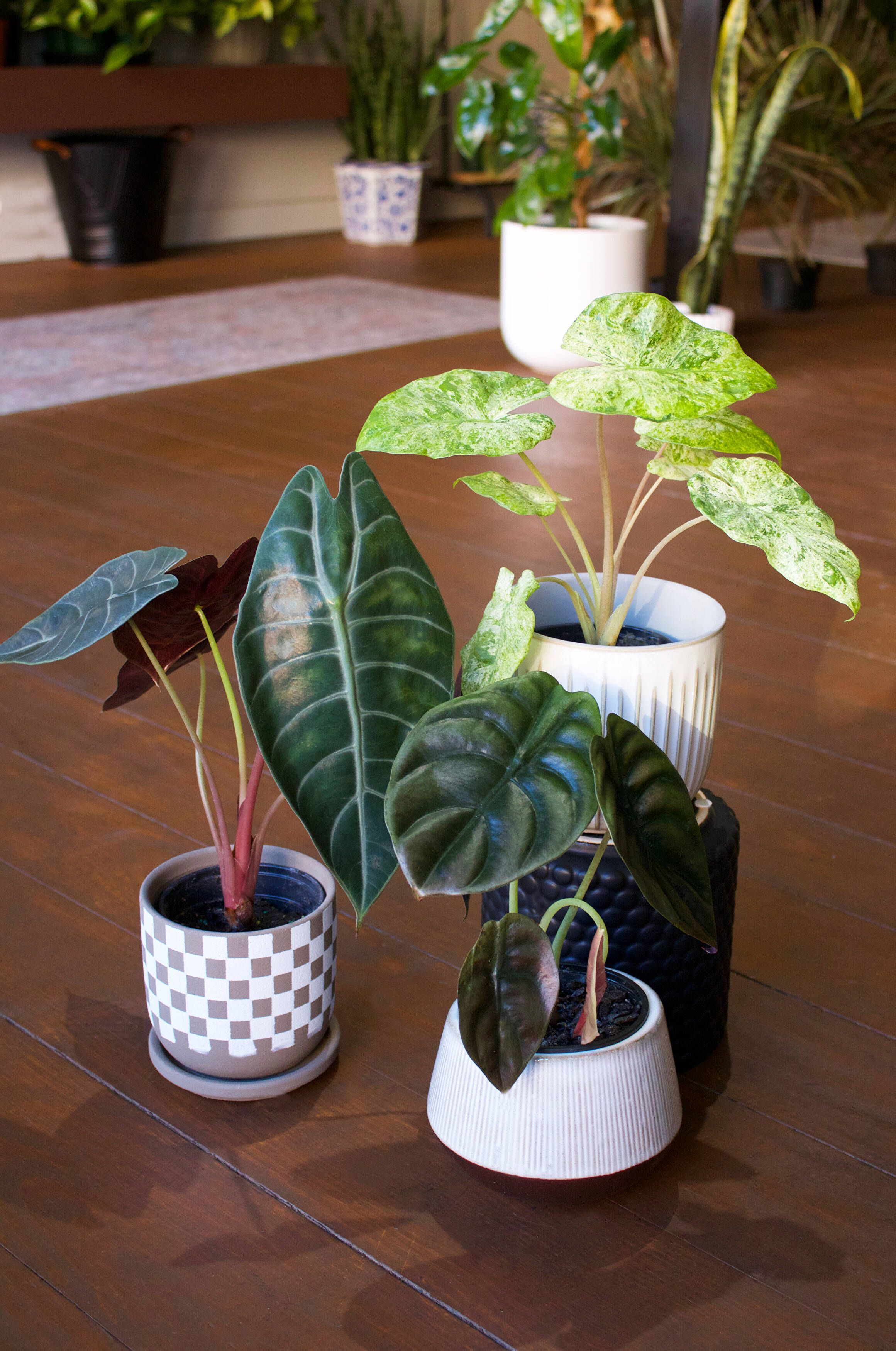
Alocasias are known for their stunning, arrow-shaped leaves with striking, often contrasting, veins. These plants bring a dramatic, tropical feel to any indoor space, with varieties that range from deep green to black and some with beautiful silver markings. While they are a favorite among plant enthusiasts for their unique appearance, they also have a reputation for being a bit more demanding than your average houseplant. However, with the right care, you can have a happy and healthy Alocasia. At Over Grown, we have a stunning selection of Alocasias and our team would love to help you find the perfect one for your space!
Alocasia Lighting
Originating from the tropical and subtropical rainforests of Asia and eastern Australia, Alocasias thrive on brighter light.
- Ideal light conditions: Provide bright, indirect light. An east-facing window is perfect, or a spot a few feet away from a south or west-facing window. Morning or late afternoon direct sun is acceptable, but prolonged, direct sun exposure can be too harsh.
- Avoid: Low light conditions will cause slow growth and elongated stems. Harsh, direct afternoon sun can scorch the leaves and cause them to yellow or brown.
- Signs of improper light: Leaves that turn yellow or brown, or develop crispy, brown edges, can be a sign of too much direct sun. Slow growth or a plant that is reaching for the light can indicate too little light.
Alocasia Watering
Alocasias prefer consistently moist soil, but not soggy. They are prone to root rot if overwatered.
- How often to water your Alocasia: Water thoroughly when the top two inches of soil feel dry to the touch. The frequency will depend on the season, size of the pot, and amount of light they are being given. Typically, with more frequent watering needed in warmer months and less in winter.
- Potting advice: Use a pot with proper drainage to ensure that excess water can escape. Never let your Alocasia sit in wet, soggy soil. If you want a different planting medium option, Alocasias do really well in semi-hydroponic set ups such as leca. Leca is porous and allows constant aeration to the roots as opposed to water logged soil, which can suffocate the roots. We carry leca in-store and would love to help you see if it's a good fit for your plant set-up.
Alocasia Humidity
Alocasias are tropical plants and absolutely love high humidity. Average household humidity is often too low for them to thrive. Ideally, they would like 60-80% humidity to thrive. Low humidity can quickly lead to dry, unhealthy foliage.
- Methods to increase humidity: Grouping plants together helps create a humid microclimate. A pebble tray with water under the pot can also help. The best solution, however, is a humidifier, which can make a significant difference in the health and growth of your Alocasia.
- Signs of not enough humidity: Browning or crispy leaf edges, leaves that are curling or drooping despite being properly watered, or if they are losing leaves.
Alocasia Soil and Fertilization
- Potting medium: A chunky, airy, and well-draining mix is essential for Alocasias. This allows for proper aeration and prevents the roots from getting waterlogged. We use and recommend Rosy’s Aroid Specialty Blend, which can be found in-stores. Check out our blog 'All About Rosy' to learn more about Rosy Soil. We also recommend trying out a hydroponic set-up like leca, also can be found in-stores.
- Fertilizing: During the growing season (spring and summer), you can apply a diluted, balanced liquid fertilizer every 2-4 weeks. You can slightly reduce fertilizing during the fall and winter when the plant's growth slows. For a simple way to feed your plant, check out our liquid fertilizer drops. They're available in-store and are perfect for consistent, healthy growth.
Alocasia Dropping Leaves
- Causes: This is often a sign of stress, most commonly due to a change in environment or watering issues (either too much or too little). It is also natural for Alocasias to drop an old leaf to grow a new one. If it’s only one or two leaves, don’t worry, but if it's multiple leaves at once, assess your care routine.
- Solutions: Ensure a consistent watering schedule and avoid drastic changes in light or temperature. Check for pests or root rot if the problem persists.
Alocasia Browning Edges or Tips
- Causes: This is a classic sign of low humidity or inconsistent watering.
- Solutions: Increase the humidity around your plant with a humidifier. Make sure you are watering consistently, allowing the top two inches to dry out before watering again.
Alocasia Pests and Treatment
- Common Alocasia pests: The biggest one to look out for would be spider mites. Check your alocasias regularly for fine webbing and pale discoloration. Other pests to look out for include mealybugs (white, cottony bugs), and thrips.
- Treatment: For minor infestations, wipe down leaves with a damp cloth. For more serious issues, apply insecticidal soap or a neem oil solution. We recommend our organic pest treatment that you can find in-store to keep infestations at bay and prevent future outbreaks. Pests such as spider mites specifically, love dry conditions and a stressed out plant. Another reason to try and keep humidity up for these plants.
To learn more about houseplant pests, visit our blog, Identifying and Treating Houseplant Pests. Still struggling to figure out what's wrong with your plant? Sometimes a little expert guidance makes all the difference. Stop by Over Grown for a plant consultation, and we'll help get your plant back on track.
A Summary Key recommendations for new Alocasia owners:
- Lighting: Bright, indirect light is a must.
- Watering: Water when the top two inches of soil are dry.
- Humidity: These plants love and need high humidity to thrive.
As always, our in-store employees are always available to provide personalized guidance and assistance with your plant care questions. We hope this guide helps your Alocasias thrive!
If you're looking for more expert advice, exclusive content, and a community of fellow plant lovers, be sure to sign up for the Over Grown newsletter below.