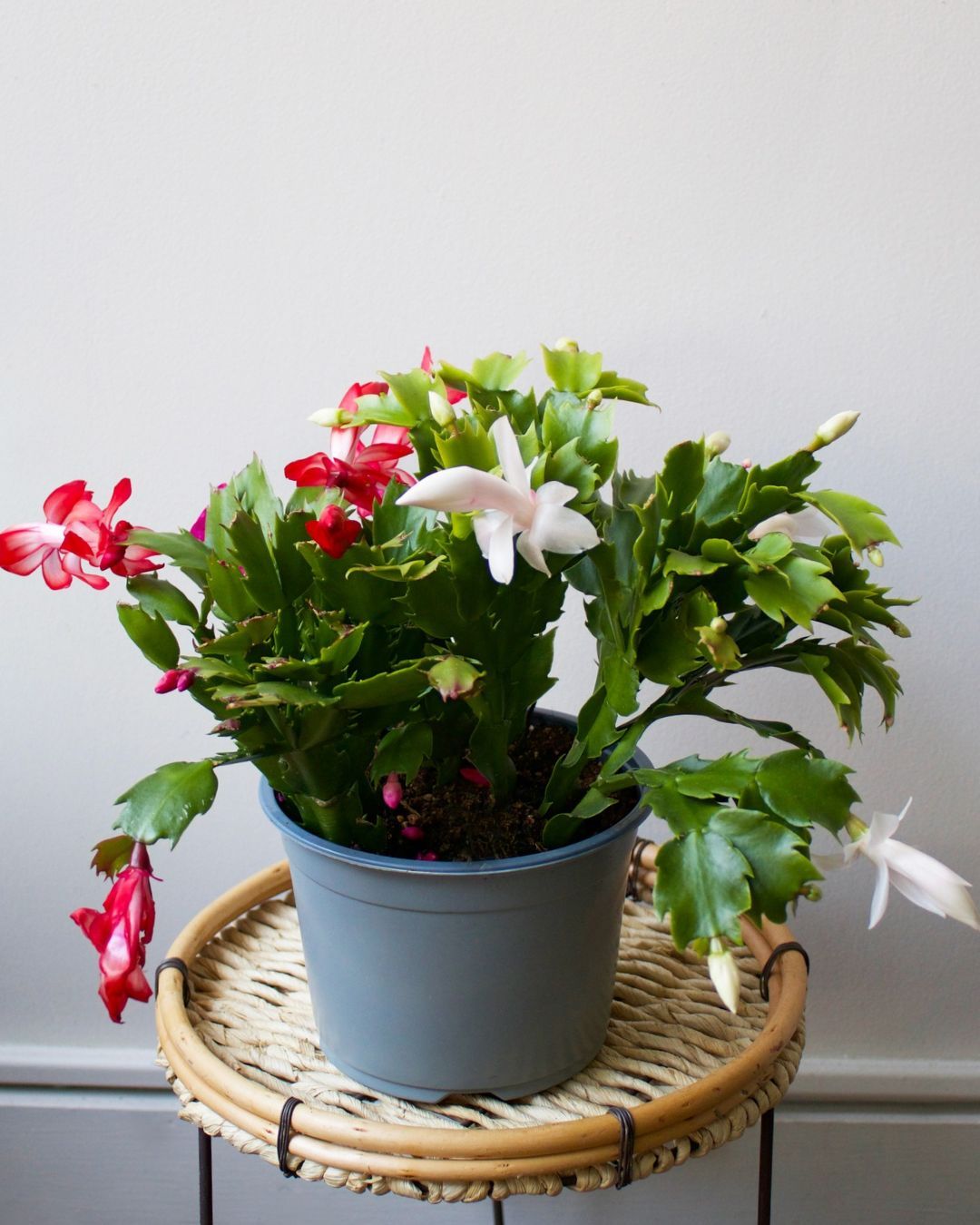
Around the holidays, grocery stores and garden centers fill up with beautiful, blooming holiday cacti. Almost all of them are labeled simply as "Christmas Cactus." However, if you bring one home in November, there is a very high chance you actually bought a Thanksgiving Cactus.
While all three types belong to the same family of forest cacti, they are distinct species with different leaf shapes, bloom times, and flower structures. Here is how to identify which holiday cactus you have, why it matters, and the exact steps to get yours to rebloom year after year.
How to Tell Them Apart by Leaf Shape
You don't have to wait for flowers to open to identify your plant. The easiest way to tell them apart is by looking closely at the edges of the flattened stem segments.
- Thanksgiving Cactus: Look for sharp, claw-like points or serrated "teeth" along the edges of each leaf segment. It naturally blooms from late October through November.
- Christmas Cactus: The leaf segments are noticeably smoother with rounded, scalloped edges and no sharp points. The stem segments also tend to droop and arch more gracefully. It naturally blooms from late December through January.
- Easter Cactus: The leaf segments are rounded with smooth, wave-like notches along the edges, often featuring tiny bristly hairs at the ends of the segments. It naturally blooms in spring, usually around March or April.
Flower Shape Differences
If your plant is actively in bloom, the flowers offer another dead giveaway:
- Thanksgiving & Christmas Cacti: Feature asymmetrical, tube-like flowers that project outward with petals blowing backward. Thanksgiving cactus blooms hold horizontally, while true Christmas cactus blooms hang downward toward the pot.
- Easter Cactus: Features symmetrical, starburst-shaped flowers that open flat facing upward toward the light.
How to Get Your Holiday Cactus to Bloom Again Next Year
Unlike desert cacti, holiday cacti are tropical epiphytes natively grown in cool, shaded mountain rainforests. In nature, they trigger flower buds based on changing seasonal light and temperature cues. If your holiday cactus grows lush green leaves all year but refuses to produce buds, follow this simple recipe starting in early autumn:
1. Give It Long, Uninterrupted Darkness
Starting in mid-to-late September, your plant needs 12 to 14 hours of continuous darkness every single night for roughly six to eight weeks. Even indoor artificial light from a lamp or television can disrupt this cycle and prevent bud formation. Cover the plant with a dark box or place it in a closet/unused room from early evening until morning every day.
2. Expose It to Cool Night Temperatures
Cooler air signals to the plant that winter is coming. Keep the plant in a room that cools down at night. If night temperatures stay consistently cool, the plant may set buds even with slightly less dark hours.
3. Do Not Move It Once the Buds Set!
This is the single most important rule of holiday cactus care: once small flower buds appear at the tips of the leaf segments, leave the pot right where it is. Moving the plant to a new room, rotating it, exposing it to warm furnace drafts, or letting the soil dry out completely while buds are forming causes stress. When stressed, a holiday cactus will instantly drop all its unopened buds.
Basic Year-Round Care
Holiday cacti are remarkably long-lived, often handed down through generations as heirloom plants!
- Soil: Use a light, fast-draining substrate like our Dry Mix or Aroid Mix to prevent root rot.
- Light: Bright, indirect light year-round. Direct hot sun will scorch and redden the leaf segments.
- Watering: Water thoroughly when the top couple of inches of soil feels dry. Cut back slightly on water during late fall while buds are setting.
Need help identifying your holiday plant or getting it potted into fresh soil? Bring it by the Plant Bar at our Westerville or Dublin shops!