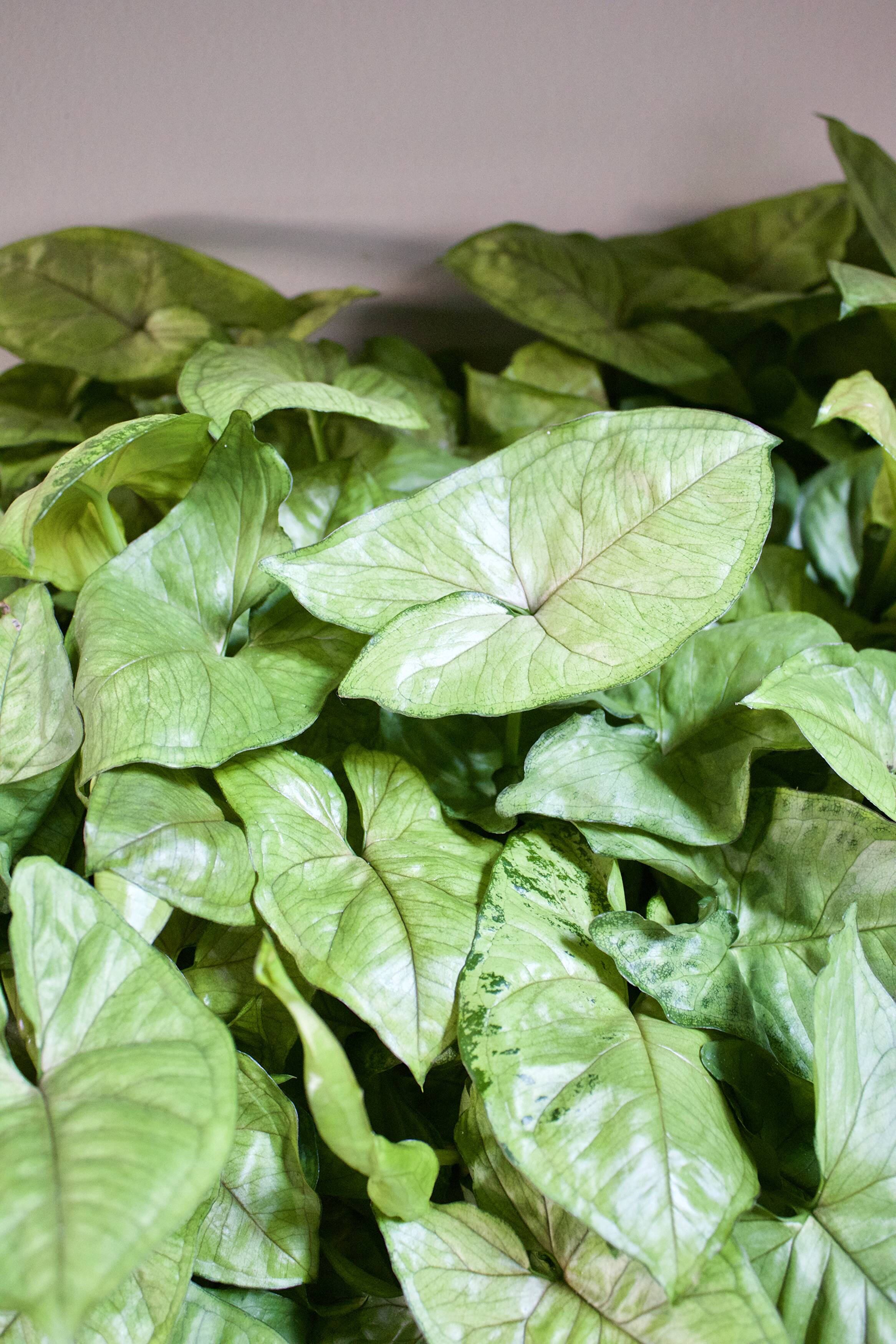
Syngonium plants, sometimes known as Arrowhead Vines, are dynamic and fast-growing additions that bring a lush, tropical feel to any indoor space. They are celebrated for their unique leaf shapes, which transition from a distinct heart shape to a multi-lobed "arrowhead" as they mature! They have an incredible range of colors, including soft pinks, deep greens, and striking white variegation. Syngoniums are highly versatile, thriving whether they are trailing from a hanging basket or climbing up a moss pole.
At Over Grown, we love how these adaptable vines can suit almost any aesthetic. While they are relatively easy-going, understanding their specific preferences for light and moisture will help you maintain those vibrant patterns and encourage vigorous growth!
Syngonium Lighting
Syngoniums are flexible with light, but their growth habit and color intensity are directly tied to how much brightness they receive.
- Ideal light conditions: Bright, indirect light is the sweet spot. An east or north-facing window provides the gentle morning sun they love, while a spot a few feet back from a west or south-facing window keeps them safe from harsh rays.
- The colors: Varieties with heavy variegation, like the 'Albo' or 'Pink Splash,' need brighter light to keep their colors from reverting to plain green. Darker green varieties are more tolerant of lower light areas.
- Avoid: Direct midday sun will quickly scorch the delicate leaves, causing brown patches. On the other hand, very low light will result in "leggy" growth, where the stems become long and thin with small, sparse leaves.
- Signs of improper light: If the variegation begins to disappear and the plant looks dull, it needs more light. If the leaves look bleached or develop crispy spots, it is likely getting too much direct sun.
Syngonium Watering
Syngoniums prefer to not dry out, but are susceptible to root issues if left in soggy conditions.
- How often to water: Allow the top couple inches of soil to dry out before reaching for the watering can again. When you do water, make sure you do so thoroughly until water runs out of the drainage holes.
- Check the soil: These plants are slightly more thirsty than a Pothos but less demanding than something like a Calathea. Always use your finger to check the moisture level rather than sticking to a strict calendar schedule.
- Avoid: Letting the soil dry out completely until the plant wilts heavily, or letting the plant sit in standing water. This accompanied by watering too often is how root rot occurs.
Syngonium Soil and Fertilization
A good soil blend that balances drainage and moisture retention is necessary for a healthy root system.
- Potting medium: An airy, well-draining mix is essential to allow oxygen to reach the roots. We highly recommend and carry Rosy Soil's Houseplant mix in-store. Its sustainable ingredients provide the perfect balance of drainage and nutrients. You can read more in our blog ”All About Rosy”.
- Fertilizing: Because Syngoniums are such fast growers, they appreciate regular feeding. During the spring and summer, apply a diluted, balanced liquid fertilizer every 2 to 4 weeks. For an easy routine, pick up our liquid fertilizer drops in-store to keep your vines lush all year long!
Syngonium Humidity & Leaf Care
Syngoniums appreciate a bit of extra moisture in the air to keep their new leaves unfurling smoothly. Certain varieties will be more/less finicky about this, but if you can provide some humidity boost, they’ll definitely love it.
- Methods to increase humidity: They thrive in humidity levels above 50%. Grouping plants together, using a pebble tray, or running a humidifier nearby will prevent the new leaves from getting "stuck" or developing crispy edges.
- Clean the foliage: Arrowhead leaves can be quite broad and act as dust magnets. Gently wipe the leaves with a damp cloth every few weeks to keep the pores clear and the plant looking its best.
Syngonium Pests and Treatment
While generally hardy, the soft new growth of Syngoniums can sometimes attract unwanted visitors.
- Common Pests: Keep an eye out for Aphids (small, sap-sucking insects often on new growth), Spider Mites (look for fine webbing under leaves), and Mealybugs (fuzzy white spots in the crevices of the stems).
- Treatment: Isolate the plant immediately if you spot pests. Rinse the foliage in the sink or shower to knock off as many insects as possible. We recommend using our Plant Protect Spray to treat the entire plant, ensuring you hit the undersides of the leaves. For more help, check out our blog, “Identifying & Treating Houseplant Pests”.
Even the most adaptable plants can run into trouble if their environment is off-balance.
New Leaves Are Small or "Stuck"
- Causes: This is almost always a humidity issue. If the air is too dry, the delicate new leaves can't slide out of the protective sheath easily.
- Solutions: Increase the humidity around the plant. You can also very gently mist the emerging leaf with warm water to help lubricate its exit. While we don’t recommend consistently misting your houseplants, doing it just on trapped growth shouldn’t be a problem.
Yellowing Leaves
- Causes: Often a sign of overwatering. Occasionally, the oldest leaves at the base will turn yellow and drop as a natural part of aging, this is normal!
- Solutions: Ensure your pot has drainage holes and that you aren't watering while the soil is still saturated. If the yellowing is widespread, check the roots for signs of rot.
Long, Reaching Stems (Legginess)
- Causes: The plant is "searching" for more light.
- Solutions: Move your Syngonium to a brighter location. You can also prune back the long stems to encourage a bushier shape. These cuttings are also incredibly easy to propagate in water, to learn more, visit our previous blog, “Plant Propagation for Beginners”.
Key recommendations for new Syngonium owners:
- Lighting: Bright, indirect light keeps the colors vibrant and the growth compact.
- Watering: Keep the soil consistently watered when the top dries, but never soggy.
- Support: Decide early if you want your plant to trail down or climb up, they love a moss pole!
Our team is always in-store and ready to help you pick out the perfect variety or troubleshoot your care routine.
We hope this guide helps your Syngoniums grow wild and beautiful! For more tips, workshop announcements, and plant inspiration, sign up for our newsletter below.