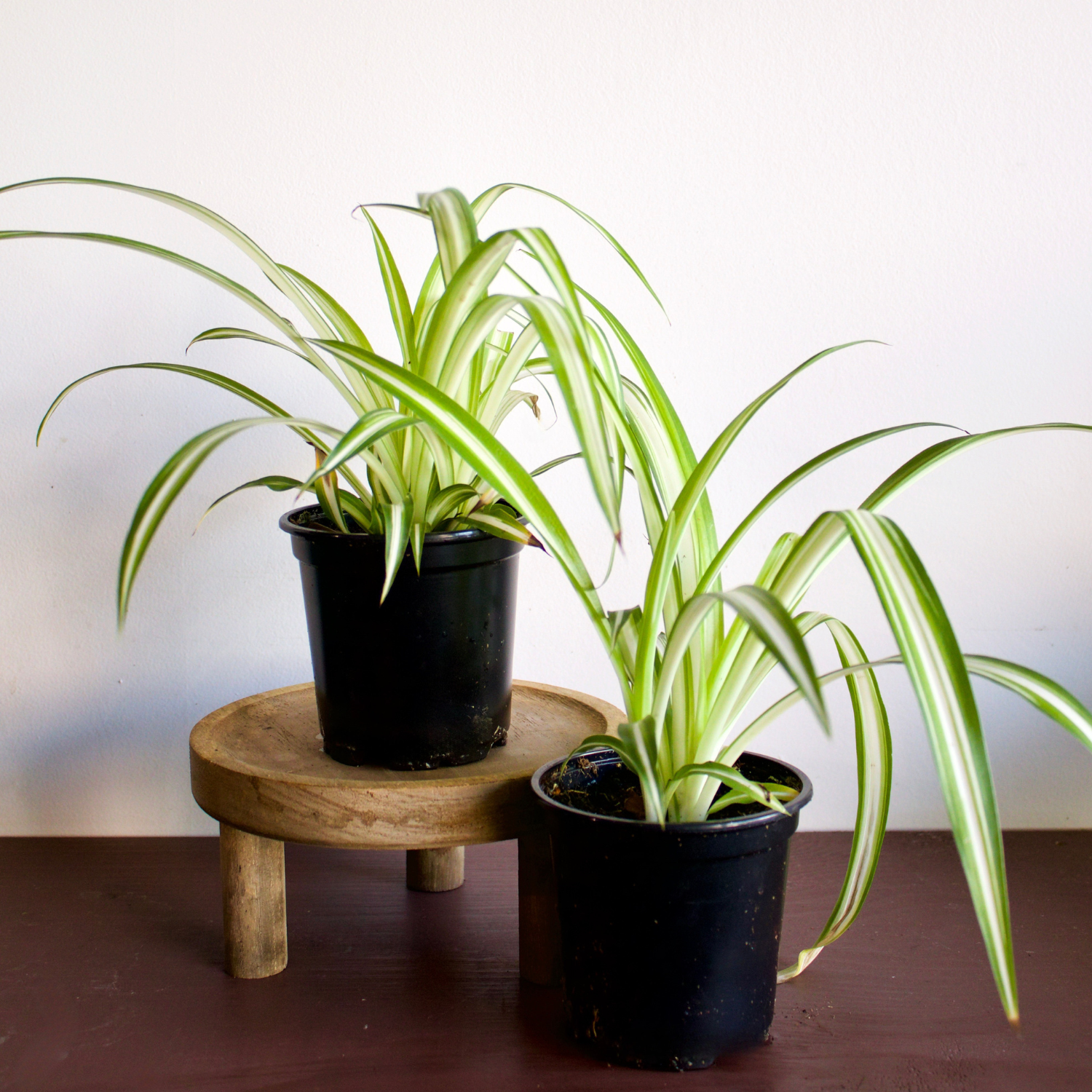
Spider plants are one of the most fun plants to watch grow in the houseplant world. Known for their grass-like leaves and their habit of producing tiny "spiderettes", they are a staple to have in any collection. They are incredibly hardy, air-purifying, and one of the most rewarding plants for those who want to try their hand at propagation.
At Over Grown, we love the classic, effortless charm of a Spider plant. Whether you choose the solid green variety or the variegated types with their striking white stripes, these plants are perfect for hanging baskets, or situated on a shelf.
Spider Plant Lighting
Spider plants are highly adaptable, but they have a definite "sweet spot" when it comes to sunlight.
- Ideal light conditions: Bright, indirect light is where they truly shine. A spot near a window with filtered light will keep the leaves vibrant and encourage the plant to produce babies.
- Adaptability: They are famously tolerant of lower light conditions, making them a great choice for spots further away from windows. However, they may grow more slowly and produce fewer offshoots in darker areas.
- Avoid: Direct, hot midday sun can scorch the long, thin leaves, leading to unsightly brown streaks.
- Signs of improper light: If the variegation on your plant starts to fade or the leaves look pale, it likely needs a bit more brightness. If you see bleached patches, it’s likely getting too much direct sun.
Spider Plant Watering
While they are forgiving of an occasional missed watering, Spider plants prefer a consistent routine to keep their foliage lush.
- How often to water: Water thoroughly when the top half of the soil feels dry. They have tuberous roots that store water, which gives them some drought tolerance.
- Check the soil: Use the finger test to ensure the soil isn't staying soggy. During the spring and summer growing season, you may find they need water more frequently.
- Avoid: Letting the plant sit in standing water. Like most houseplants, they are susceptible to root rot if the soil remains waterlogged.
- Pro-tip: Spider plants are a bit sensitive to chlorine in tap water, which can cause the tips of the leaves to turn brown. If you notice this, try using distilled water, or even rainwater.
Spider Plant Soil and Fertilization
A well-draining potting mix is essential to support the vigorous root system of a healthy Spider plant.
- Potting medium: A standard, high-quality potting mix that balances drainage and moisture retention is ideal. We use and recommend Rosy Soil’s Houseplant mix, which you can find in-stores. Check out our blog “All About Rosy” to learn more.
- Fertilizing: During the spring and summer, you can apply a balanced liquid fertilizer every 4 weeks. You can reduce this during the fall and winter months. For a simple way to feed your plant, check out our liquid fertilizer drops available in-store.
Spider Plant Humidity & Leaf Care
Spider plants are quite happy in average household humidity, but they won't turn down a little extra.
- Methods to increase humidity: While they are very adaptable, boosting the humidity with a nearby humidifier or a pebble tray can help prevent those pesky brown leaf tips. For more humidity tips, check out our blog, “Humidity 101”.
- Leaf care: Their narrow leaves don't collect as much dust as broader plants, but an occasional shower in the sink can help keep them clean.
Spider Plant Pests and Treatment
Spider plants are generally very resilient, but it’s always good to keep an eye out for occasional visitors.
- Common Pests: Look out for Spider Mites (tiny webs on the leaves) or Mealybugs (white, cottony spots).
- Treatment: Isolate the plant immediately if you spot pests. Wipe down the leaves and stems, and follow up with our Plant Protect Spray to ensure the plant stays healthy. For more on identification and treatment, visit our blog, “Identifying & Treating Houseplant Pests.”
Spider plants are very expressive and will usually give you a clear sign if they need an adjustment.
Brown Leaf Tips
- Causes: This is the most common issue for Spider plants, usually caused by low humidity, inconsistent watering, or chemicals in tap water.
- Solutions: Try switching to distilled water and making sure you don’t let the plant dry out completely. You can trim the brown tips off with clean scissors for a tidier look.
Pale or Bleached Leaves
- Causes: Often a sign of too much direct sunlight or a lack of nutrients.
- Solutions: Move the plant slightly further back from the window and ensure you are keeping up with a regular fertilization schedule during the growing season.
No "Babies" or Flowers
- Causes: The plant may not be receiving enough light, or it might be in a pot that is too large. Spider plants often produce more babies when they are slightly "root-bound."
- Solutions: Ensure the plant is in a bright, indirect light spot. If the plant is very young, it may just need a bit more time to mature before it starts producing offshoots.
Key recommendations for your new Spider plant:
- Lighting: Bright, indirect light is best, but they are very adaptable.
- Watering: Allow the top inch of soil to dry out between waterings.
- Propagation: When the babies develop small roots, you can snip them off and plant them in their own pots!
Our in-store team is always available to help you pick out the perfect Spider plant or provide tips on how to propagate your new plantlets.
We hope this guide helps your Spider plants thrive and fill your home with green! For more expert advice and community updates, sign up for our newsletter below.