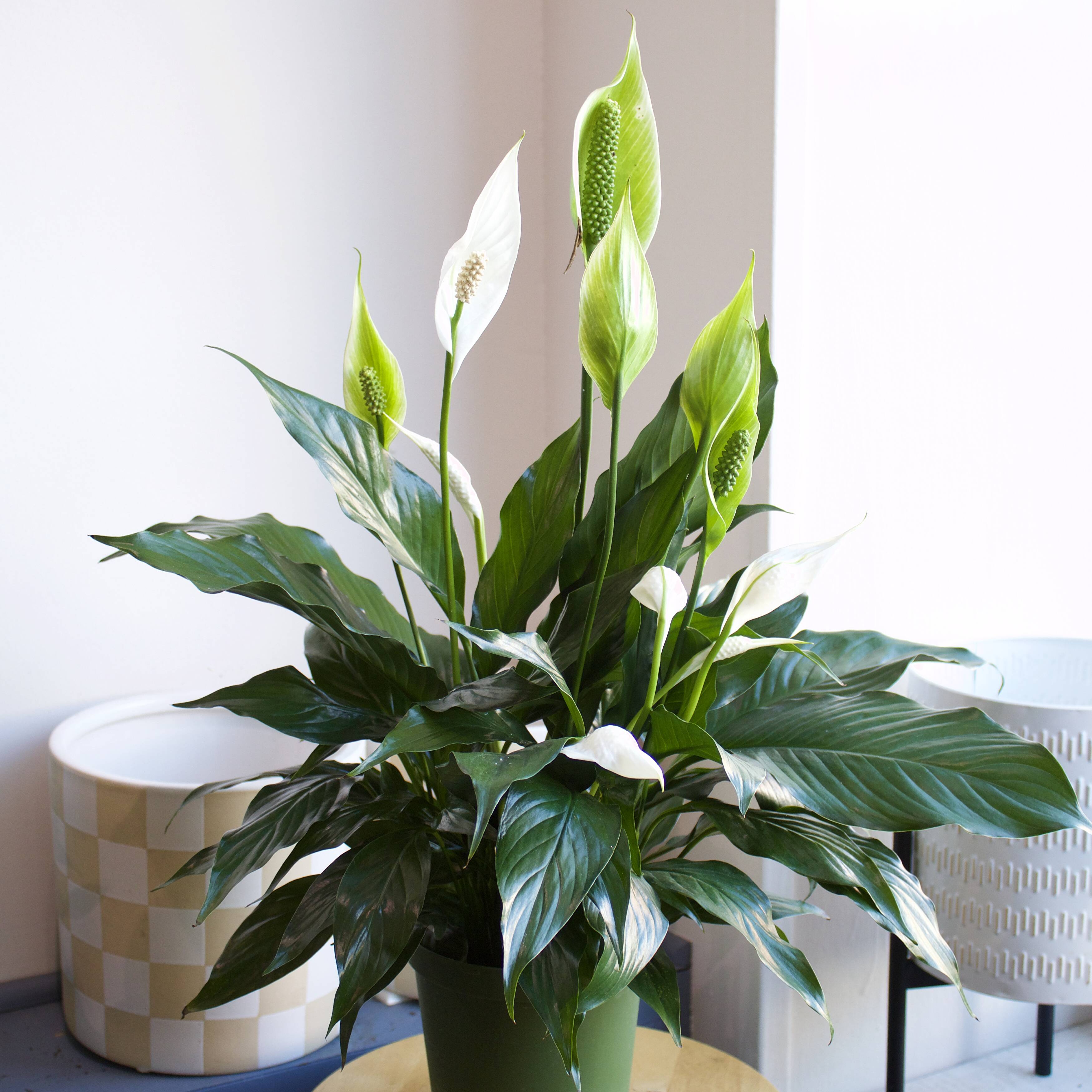
Peace Lilies, or Spathiphyllum, are among the most iconic and beloved houseplants in the world. Known for their deep green, glossy foliage and their elegant, hooded white blooms, they bring a sense of serenity and classic beauty to any interior. Beyond their looks, Peace Lilies are great for their ability to filter indoor air and their dramatic way of "telling" you exactly when they need a drink.
At Over Grown, we appreciate the Peace Lily for its expressive nature and its ability to thrive in those trickier, lower-light spots of the home. They are the perfect choice for anyone looking for a plant that communicates its needs clearly while providing a lush, tropical feel.
Peace Lily Lighting
In their natural habitat, Peace Lilies grow on the forest floor, shaded by larger trees. They prefer a similar environment in your home.
- Ideal light conditions: Bright, indirect light is best for encouraging those beautiful white blooms. A spot a few feet away from an east or north-facing window is usually perfect.
- Adaptability: They are tolerant of lower light levels, making them a great option for many rooms. However, keep in mind that in very low light, the plant will rarely bloom and growth will be slower.
- Avoid: Direct, hot sunlight will quickly scorch and bleach the leaves. If you notice your leaves turning pale or developing brown, crispy patches, it’s likely getting too much sun.
- Signs of improper light: If the plant is healthy but never produces flowers, it likely needs a move to a slightly brighter location.
Peace Lily Watering
Peace Lilies are the "drama queens" of the plant world. They will dramatically wilt to let you know the soil is dry, only to perk back up within hours of receiving water.
- How often to water: Water thoroughly when the top couple inches of the soil feels dry. You don't need to wait for the plant to wilt completely, catching it just as the leaves begin to slightly flag is the ideal timing.
- Check the soil: Use your finger to test the moisture. Peace Lilies like to stay consistently moist but never waterlogged.
- Avoid: Letting the plant sit in standing water for extended periods, which can lead to root rot. On the other hand, chronic underwatering can lead to a decline in the plant's overall health.
- Pro-tip: Peace Lilies can be sensitive to chemicals like chlorine in tap water. If you notice persistent brown tips, try using distilled water or letting your watering can sit out overnight for an easier option to try.
Peace Lily Soil and Fertilization
A soil mix that balances moisture retention with excellent drainage is vital for a healthy, blooming Peace Lily.
- Potting medium: A rich, loamy mix that doesn't compact is essential. We use and recommend Rosy Soil’s Houseplant mix, available in-store, which provides the organic matter these plants love while keeping the roots oxygenated. Check out our blog “All About Rosy” to learn more.
- Fertilizing: To encourage those signature white blooms, you can apply a balanced liquid fertilizer every 4-6 weeks during the spring and summer. Our liquid fertilizer drops are an easy way to provide the gentle nutrition these plants need to stay lush.
Peace Lily Humidity & Leaf Care
Peace Lilies thrive in higher humidity but are quite adaptable to average household levels.
- Methods to increase humidity: While they are resilient, boosting humidity with a nearby humidifier or a pebble tray will help keep the foliage vibrant and prevent the leaf tips from drying out. For more humidity tips, check out our previous blog “Humidity 101”.
- Clean the foliage: Those broad, dark leaves are dust magnets. Gently wipe them down with a damp, soft cloth every few weeks. This keeps the plant looking its best and ensures it can breathe and photosynthesize efficiently.
Peace Lily Pests and Treatment
While Peace Lilies are generally hardy, a stressed plant can occasionally attract common indoor pests.
- Common Pests: Watch for Mealybugs (white cottony fluff) or Scale on the stems and leaf undersides. Aphids can also occasionally appear on the tender new blooms.
- Treatment: Isolate the plant immediately and wipe down the leaves. We recommend a thorough application of our Plant Protect Spray to eliminate any pests. For more help, visit our blog, “Identifying & Treating Houseplant Pests.”
Most Peace Lily issues are related to water and light, and they are usually very easy to correct.
The "Dying" Wilting Look
- Causes: Almost always due to the soil being too dry.
- Solutions: Water the plant thoroughly. If the soil has become so dry it's pulling away from the sides of the pot, try "bottom watering" in a sink for 20 minutes to ensure the root ball is fully saturated.
Brown Leaf Tips
- Causes: Typically caused by low humidity, inconsistent watering, or a buildup of salts and minerals from tap water.
- Solutions: Switch to distilled water and increase the humidity around the plant. You can trim the brown tips off with clean scissors for a tidier appearance.
Leaves Turning Yellow
- Causes: If many leaves turn yellow at once, it’s usually a sign of overwatering. Occasionally, older leaves at the base will turn yellow and die off naturally as the plant grows.
- Solutions: Adjust your watering frequency and ensure the pot has proper drainage holes.
How to keep your serene beauty thriving:
- Lighting: Medium to bright, indirect light is best for blooms.
- Watering: Water when the top inch of soil is dry; don't be alarmed by the occasional wilt!
- Patience: If your plant isn't blooming, try moving it to a slightly brighter spot.
Stop by the shop to see our current selection of Peace Lilies and let our team help you find the perfect one for your space.
We hope this guide helps your Peace Lilies stay lush and beautiful! For more expert advice and community updates, sign up for our newsletter below.