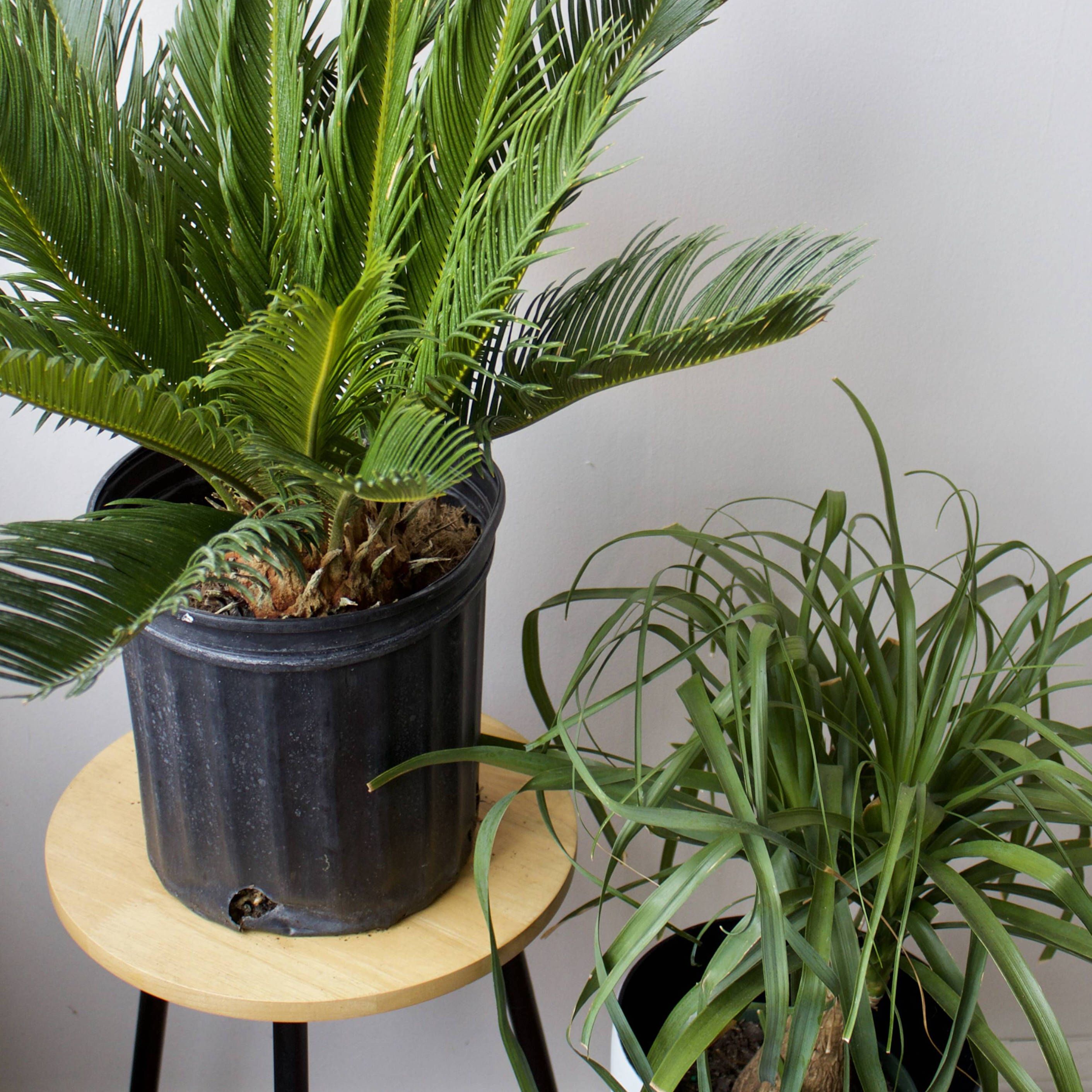
Palm plants are the ultimate symbols of relaxation and tropical elegance. These plants have a way of transforming a corner of a room and come in so many different varieties. While they are iconic indoor staples, palms have a reputation for being a bit "particular" about their environment, but with the right foundational care, they can thrive for years.
At Over Grown, we love palms for the height and texture they add to a home. They are slow-growing and steady, making them wonderful long-term plants for your collection.
Palm Lighting
Most indoor palms prefer the kind of light you’d find beneath a tropical canopy - bright but filtered.
- Ideal light conditions: Bright, indirect light is going to be best. A spot near a west-facing window provides the consistent energy they want. For some varieties, a south-facing window is also a good option, providing some extra heat and light.
- Adaptability: Varieties with thinner leaves, like the Parlor Palm, are more tolerant of lower light levels, making them great for offices or bedrooms. However, varieties such as Sago Palms, with thicker leaves, are better in higher light spaces, such as a sun room or living room.
- Avoid: Direct, midday sun on the thinner leafed varieties.
- Signs of improper light: If the fronds are turning a dull yellow or the plant hasn't put out a new spear in a long time, it likely needs more light. If the leaves look bleached or develop brown, dry patches, it’s getting too much sun.
Palm Watering
Palms are sensitive to both drought and root rot, so finding a consistent rhythm is key to keeping their fronds green.
- How often to water: Water thoroughly when the top few inches of the soil feels dry. For larger floor palms, you may want to let the soil dry out slightly further down.
- Check the soil: Use your finger or a moisture meter to ensure you aren't just watering the surface. Palms don’t want to get completely bone-dry, but also never want to stay soggy.
- Avoid: Never let a palm sit in a saucer of standing water, which quickly leads to root rot. On the other hand, letting the soil become too dry will cause the delicate leaves to turn brown and crispy.
- Pro-tip: Many palms are sensitive to chemicals in tap water. If you notice tip-burn, try using distilled water or even letting your tap water sit out overnight before using it for an easier method.
Palm Soil and Fertilization
A rich but well-draining soil is essential to keep a palm’s root system healthy and oxygenated.
- Potting medium: A high-quality, airy mix is a must. We recommend and use Rosy Soil’s Houseplant mix in-store. It offers the perfect structure for palms, ensuring that water moves through the pot while retaining the moisture the plant needs. Learn more in our blog, “All About Rosy.”
- Fertilizing: Palms are relatively light feeders, but they do appreciate nutrients during the growing season. Use a balanced liquid fertilizer every 4-6 weeks in the spring and summer. Our liquid fertilizer drops are an easy way to give them a gentle boost!
Palm Humidity & Leaf Care
Higher humidity is key for keeping indoor palms looking lush and preventing the dreaded brown tips.
- Methods to increase humidity: Most palms thrive when humidity is 50% or higher. Grouping your palm with other plants, using a pebble tray, or running a humidifier nearby, especially in the winter, will keep the fronds soft. For more humidity tips, check out our blog, “Humidity 101”.
- Clean the foliage: Palm fronds have a lot of surface area for dust to settle. Every once in a while, give your palm a shower in the tub or with a hose outdoors to rinse off dust.
Palm Pests and Treatment
Because palms love humidity, they can become targets for pests if the air in your home gets too dry.
- Common Pests: Spider Mites are the most common palm pest. They look like tiny white dots or fine webbing on the undersides of the leaves. You may also see Scale or Mealybugs on the stems.
- Treatment: If you spot pests, isolate the plant immediately. A thorough rinse in the shower is a great first step, followed by an application of our Plant Protect Spray. For more on pest identification, visit our blog, “Identifying & Treating Houseplant Pests.”
Palms are slow to grow, but they are also slow to show stress. It’s important to act when you see a change.
Brown Leaf Tips
- Causes: This is the most common palm complaint! It is usually caused by low humidity, inconsistent watering, or a buildup of minerals from tap water.
- Solutions: Increase humidity and ensure you are watering as soon as the top soil is dry. You can trim the brown tips off with clean scissors for aesthetic reasons, just be careful not to cut into the green part of the leaf.
Yellowing Fronds
- Causes: Frequent yellowing can mean the soil is staying too wet, or the plant is lacking essential nutrients.
- Solutions: Check your drainage and reduce watering frequency. If the soil is fine, ensure you are using a regular fertilizer routine during the summer.
The "Spear" Won't Open
- Causes: New palm leaves emerge as a tight "spear" before unfurling. If the spear stays closed for months, the plant may be stressed by low light or low humidity.
- Solutions: Move the plant to a slightly brighter spot and ensure it is receiving consistent water. Boosting the humidity might help as well. Remember, patience is key, palms take their time!
How to keep your tropical retreat thriving:
- Lighting: Bright, indirect light is best (though Parlor Palms can handle less).
- Watering: Keep the soil evenly moist, don't let it dry out completely.
- Humidity: Boost the moisture in the air to prevent crispy tips.
Whether you're looking for a tabletop plant or a statement plant, we have some beautiful options in the shop. Stop by and let us help you find the right palm for your space!
We hope this guide helps your palms stay green and lush! For more expert advice and exclusive content, be sure to sign up for our newsletter below.