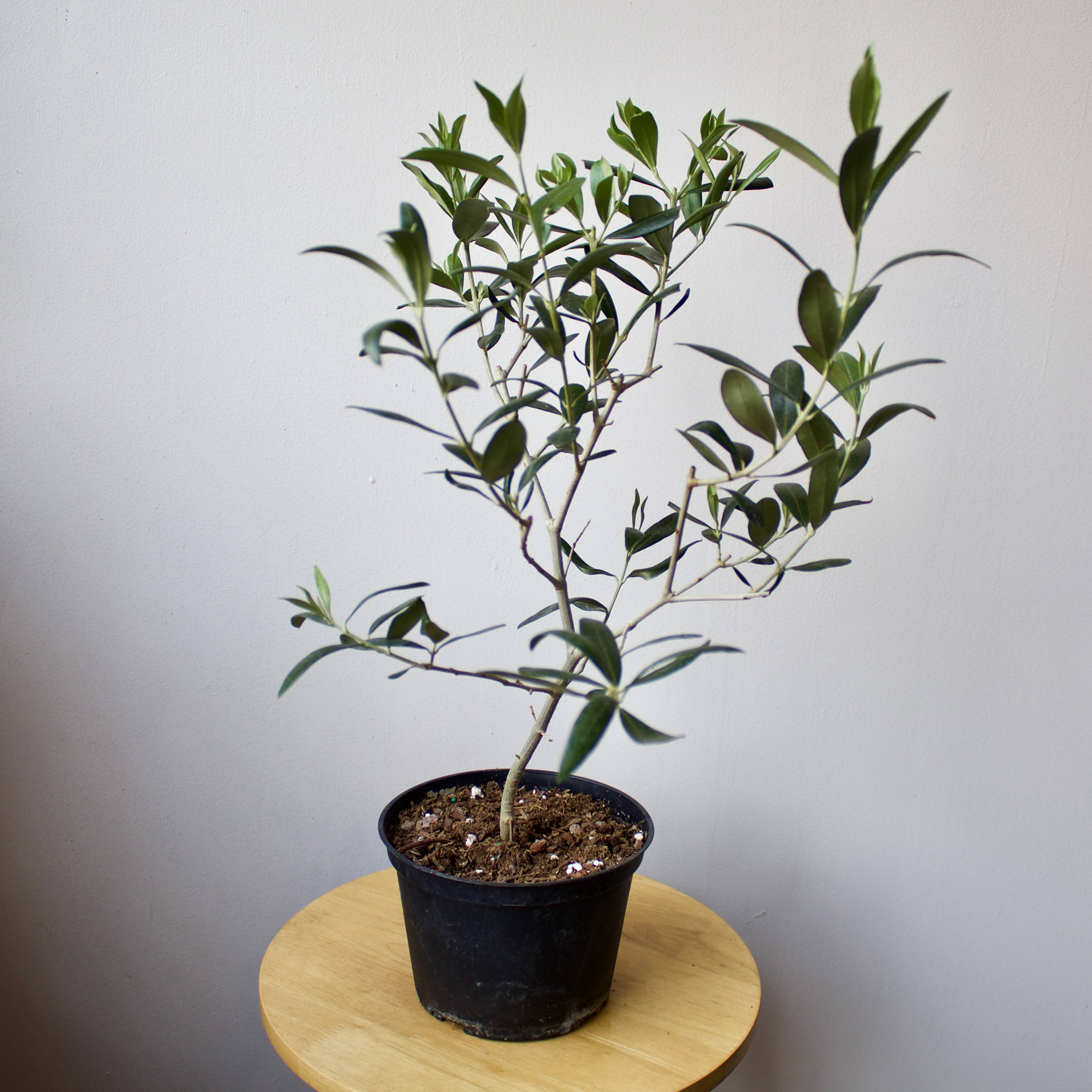
Olive trees are one of the most sophisticated additions to the modern home. Known for their narrow, silvery-green foliage and rustic, woody stems, they bring an effortless vibe to any interior. While they are traditionally outdoor trees, certain varieties can adapt beautifully to life in a bright, airy room.
At Over Grown, we love olive trees for the soft look they bring to a space. They are symbols of peace and longevity, and with the right attention to light and drainage, they can become a permanent, sculptural centerpiece in your home.
Olive Tree Lighting
Coming from the sun-soaked hills of Southern Europe, olive trees are absolute lovers of high-intensity light.
- Ideal light conditions: Bright light is non-negotiable. To thrive indoors, your olive tree needs to be placed in the sunniest spot available, ideally in a south-facing window that receives at least 6 hours of sun a day.
- The growth: Without sufficient light, the tree will quickly begin to drop its leaves and the growth will become weak and sparse.
- Avoid: Low-light rooms or corners far from a window. Olive trees will not survive for long in dim conditions.
- Signs of improper light: If your tree is dropping green leaves or if the stems are becoming long and "stretchy," it is likely craving more sun.
Olive Tree Watering
Olive trees are very drought-tolerant once established.
- How often to water: Water thoroughly when the soil has dried out. Unlike many tropicals, olive trees prefer their soil to dry out significantly between drinks.
- Check the soil: Use your finger or a wooden chopstick to check the moisture depth. Because they are prone to root issues if kept too wet, it is always better to wait an extra day if you aren't sure.
- Avoid: Overwatering or letting the plant sit in a saucer of standing water. Overwatering is the most common cause of decline for indoor olive trees.
- Signs of improper watering: Yellowing leaves that feel soft usually indicate overwatering, while crispy, curling leaves that drop off often mean the soil has been dry for too long.
Olive Tree Soil and Fertilization
Because they naturally grow in rocky, well-draining environments, the structure of the soil is vital for a healthy olive tree.
- Potting medium: A gritty, well-draining mix is essential, we use and recommend Rosy Soil’s Aroid mix soil for these plants. Check out our blog ‘All About Rosy’ to learn more.
- Fertilizing: During the spring and summer growing season, feed your tree with a balanced liquid fertilizer every 4-6 weeks. Our liquid fertilizer drops are an easy way to provide the steady nutrition needed to maintain that beautiful silvery foliage.
Olive Tree Humidity & Leaf Care
Unlike many of our other tropical favorites, olive trees actually prefer the drier air typically found in most homes.
- Methods to increase humidity: You do not need a humidifier for an olive tree! They are perfectly happy in average to low humidity levels.
- Clean the foliage: The small, narrow leaves can still collect dust over time. An occasional gentle misting followed by a light wipe-down, or a quick trip to the shower for a rinse, will keep the leaves clear and shining.
Olive Tree Pests and Treatment
Olive trees are generally hardy, but they can occasionally attract pests if the tree becomes stressed or the environment is stagnant.
- Common Pests: Watch for Scale (small, brown, shell-like bumps on the stems) or Spider Mites if the tree is kept in a particularly hot, dry spot.
- Treatment: Isolate the plant and treat it with our Plant Protect Spray. Be sure to coat the undersides of the leaves and the woody stems thoroughly. For more on identification and treatment, visit our blog, ‘Identifying & Treating Houseplant Pests.’
Olive trees are sensitive to changes in their environment, so consistency is key to their success.
Massive Leaf Drop
- Causes: This is the most common issue when first bringing an olive tree home. It is usually a reaction to a change in light or a sudden shift in watering habits.
- Solutions: Find the sunniest spot in your house and keep the tree there. Avoid moving it around frequently, and ensure you are sticking to consistent watering habits.
Brown, Crispy Tips on New Growth
- Causes: This often indicates that the tree is getting too dry too fast, meaning it might need a repot, or its not getting watered all the way through.
- Solutions: Ensure that when you water, you are saturating the soil until it drains out the bottom. If the soil has become very hard and compacted, you may need to bottom water to rehydrate it.
The Tree Looks "Limp"
- Causes: This can be a sign of root rot from overwatering or poor drainage.
- Solutions: Check the drainage holes to ensure they aren't blocked. If the soil is soggy, stop watering immediately and move the tree to a spot with better airflow to help the soil dry out.
How to keep your Mediterranean centerpiece thriving:
- Lighting: Maximum sun! A south-facing window is ideal.
- Watering: Let the soil dry out before soaking it again.
- Environment: They love dry air and plenty of circulation.
Stop by the shops to see these beauties and let our team help you decide if this statement piece for your home will be a good fit.
We hope this guide helps your olive trees grow strong and peaceful! For more expert advice and community updates, sign up for our newsletter below.