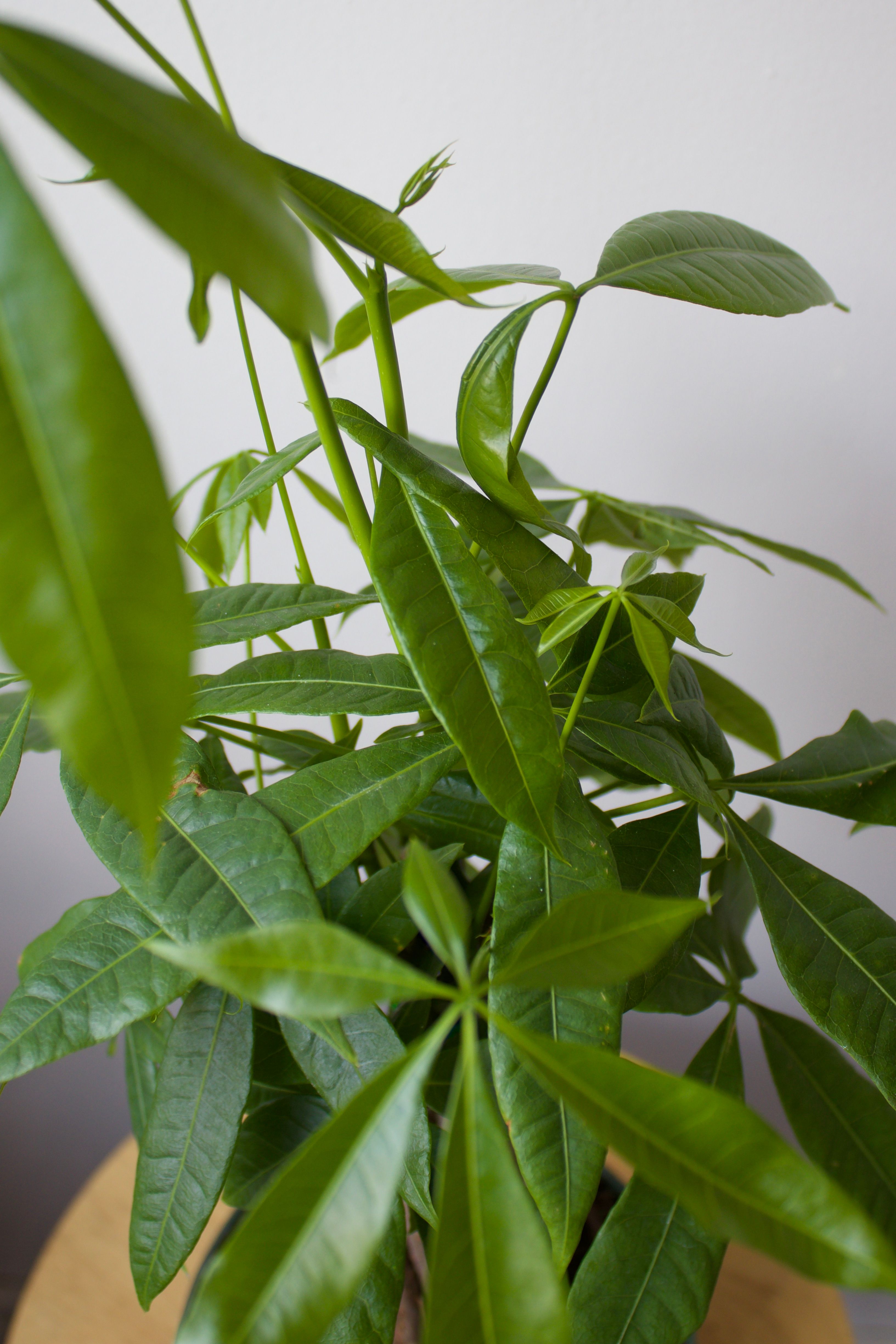
The Money Tree is a beloved staple for indoor jungles, sometimes recognized by its iconic braided trunk and lush, hand-shaped green leaves. In many cultures, these trees are symbols of luck, high energy, and prosperity, making them a popular choice for home offices or as housewarming gifts.
At Over Grown, we love the Money Tree for its resilience and "statement" look. While they are hardy, they do have a few specific preferences, especially when it comes to water and light, that will keep them from dropping leaves and ensure they continue to grow beautifully!
Money Tree Lighting
Money Trees are native to the wetlands of Central and South America, where they thrive in bright, dappled sunlight.
- Ideal light conditions: Bright, indirect light is what they will prefer. They do exceptionally well in south or west-facing windows, as long as they aren’t getting too many hours of direct sun rays.
- Adaptability: They can adapt to medium light, though you may notice the growth slows down and the stems become a bit more "leggy" as they reach for the sun.
- Avoid: Prolonged, direct afternoon sun can scorch the leaves, leading to yellow or brown spots. On the other hand, too low of light will cause the plant to drop its leaves as it struggles to produce enough energy.
- Signs of improper light: If your tree is leaning heavily in one direction, it's asking for more light. We recommend rotating the pot a quarter-turn every time you water to ensure even growth on all sides.
Money Tree Watering
This is where most people might do more harm than good for their Money Tree. These plants do not like to be overwatered.
- How often to water: Water thoroughly until it drains from the bottom, but then allow the top to 75% of the soil to dry out before watering again.
- Check the soil: Use your finger to check the soil, you can also go by the weight of the pot. Because Money Trees store water in their thick trunks, they are more drought-tolerant than they look.
- Avoid: Never let the plant sit in a saucer of standing water, and try to avoid getting water directly on the trunk, which can lead to stem rot.
- Signs of improper watering: Drooping, yellow leaves often signal overwatering, while crispy, curling leaves usually mean the plant is too dry.
Money Tree Soil and Fertilization
A soil that allows for quick drainage while still providing some organic nutrients is key.
- Potting medium: A well-draining, chunky, nutrient-rich mix is essential. We use and recommend Rosy Soil’s Aroid mix for these plants, available in-store, which provides excellent aeration for the roots. To learn more about our favorite soil, check out our blog “All About Rosy.”
- Fertilizing: During the growing season (spring and summer), feed your tree with a balanced liquid fertilizer every couple times you water. Our liquid fertilizer drops are a perfect way to keep your plant vibrant and fueled for new growth.
Money Tree Humidity & Leaf Care
Because they are tropical plants, Money Trees appreciate a humid environment, which helps keep their foliage soft and green.
- Methods to increase humidity: Average household humidity is usually fine, but if your home is particularly dry (especially in winter), your tree will love a nearby humidifier. For more humidity tips, check out our blog, “Humidity 101”.
- Clean the foliage: Their large leaves can collect dust over time. Gently wipe the leaves with a soft, damp cloth every few weeks to ensure they can photosynthesize efficiently and stay pest-free.
Money Tree Pests and Treatment
Money Trees are generally sturdy, but they can occasionally fall prey to common indoor pests if the plant is stressed.
- Common Pests: Watch for Mealybugs (white cottony fluff in the leaf joints) and Scale (small brown bumps on the stems). Spider Mites can also appear if the air is too dry.
- Treatment: If you spot anything suspicious, isolate the plant immediately. Wipe down the leaves and stems, and apply a thorough coating of our Plant Protect Spray. For more on keeping your plants safe, visit our blog, “Identifying & Treating Houseplant Pests.”
Money Trees are quite communicative, you just have to know what their leaves are saying!
Dropping Green Leaves
- Causes: This is the most common problem we see people have. It usually happens after a sudden change, such as moving the plant to a new room, a sudden temperature drop, or a drafty window.
- Solutions: Find a bright, stable spot for your tree and try to leave it there. Consistency is key! Once it acclimates to its environment, the leaf drop should stop.
Yellowing Leaves
- Causes: Typically a sign of overwatering or the soil staying wet for too long.
- Solutions: Adjust your watering schedule and ensure your pot has drainage. Make sure you aren't watering too frequently, especially in the winter months when the plant's growth slows down.
New Growth is Pale or Small
- Causes: Usually a sign that the plant needs more light or a boost of nutrients.
- Solutions: Gradually move the plant to a brighter location and ensure you are keeping up with a regular fertilization routine during the spring and summer.
Key tips for your new lucky tree:
- Lighting: Bright, indirect light and regular rotation for even growth.
- Watering: Let the soil dry out significantly between waterings.
- Stability: Pick a good spot and keep it there to avoid stress-induced leaf drop.
Stop by Over Grown to find your own "lucky" tree or to chat with our team about how to keep yours thriving.
We hope your Money Tree brings plenty of green (and maybe a little luck) into your home! For more care tips and event updates, sign up for our newsletter below.