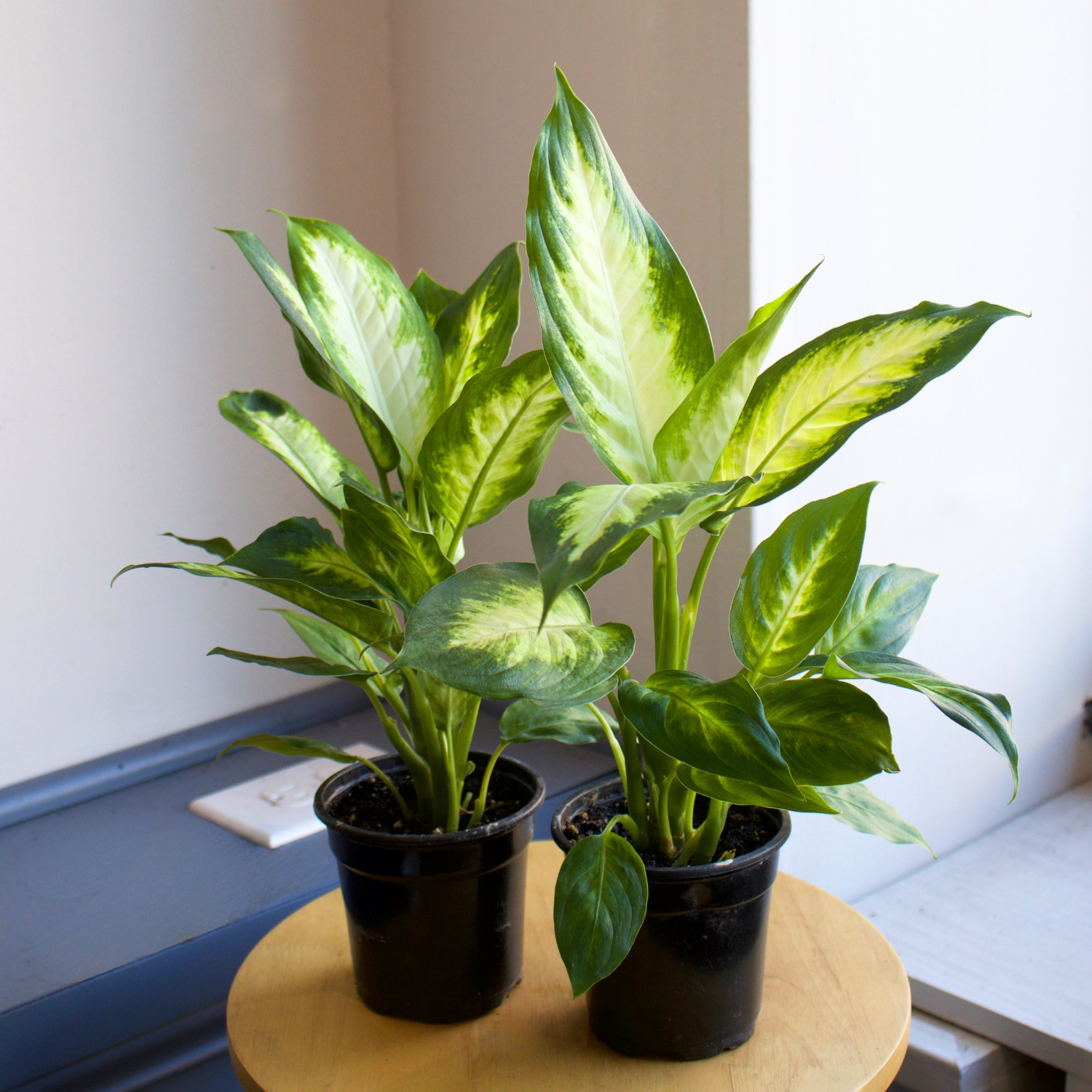
Dieffenbachia, commonly known as Dumb Cane, is a well loved indoor plant. They are favored for their lush, oversized leaves and striking variegated patterns. These tropical beauties feature broad foliage splashed with shades of cream, yellow, and lime green, making them an instant focal point in any room. They are known for their upright growth habit and can eventually reach impressive heights, creating a dense, jungle-like feel in your home.
At Over Grown, we love Dieffenbachia for the dramatic look they add to a space. While they are generally low-fuss, providing them with the right balance of care will ensure their patterns stay vibrant and their stems grow strong and sturdy.
Dieffenbachia Lighting
Dieffenbachia are native to the tropical forests of Central and South America, where they thrive in filtered, dappled sunlight.
- Ideal light conditions: Bright, indirect light will be best. A spot near an east-facing window or tucked back from a south-facing window is perfect for maintaining those bold, variegated colors.
- The colors: Generally, varieties with more white or cream variegation require more light than those that are mostly green. If the light is too low, the plant may lose its distinct patterns and grow more slowly.
- Avoid: Direct afternoon sun will quickly scorch the leaves, leading to bleached spots and crispy edges. Conversely, deep shade will cause the plant to become "leggy" as it stretches toward the nearest light source.
- Signs of improper light: Faded leaf colors often indicate the plant needs a brighter spot, while scorched, brown patches usually mean it’s getting too much direct exposure.
Dieffenbachia Watering
Consistent watering is key for Dieffenbachia, though they are quite sensitive to being over-saturated.
- How often to water: Water thoroughly when the top half of soil feels dry. Ensure they are getting watered all the way through, then wait for the top layer to dry before watering again.
- Check the soil: Use your finger to test the moisture level. Depending on the light and temperature in your home, you may find they need more frequent water in the summer than in the winter.
- Avoid: Letting the plant sit in standing water, which is a fast track to root rot. On the flip side, allowing the soil to become bone-dry will cause the lower leaves to yellow and drop.
- Signs of improper watering: Drooping leaves can mean the plant is either thirsty or overwatered, always check the soil moisture before adding more water.
Dieffenbachia Soil and Fertilization
A well-draining, airy potting medium is vital to keep the root system healthy and prevent the soil from becoming compacted.
- Potting medium: A high-quality indoor potting mix that balances drainage and moisture retention is ideal. We use and recommend Rosy Soil's Houseplant mix, available in-store, which provides the organic matter these plants crave. Check out our blog “All About Rosy” to learn more.
- Fertilizing: During the active growing season (spring and summer), apply a diluted, balanced liquid fertilizer every 4 weeks. Our liquid fertilizer drops are a simple, effective way to keep your Dieffenbachia fueled for new growth.
Dieffenbachia Humidity & Leaf Care
Dieffenbachia appreciate a humid environment to keep their large leaves looking pristine.
- Methods to increase humidity: While they adapt to average home humidity, they will thrive with a nearby humidifier, especially during the dry winter months. For more tips on humidity, visit our previous blog, “Humidity 101.”
- Clean the foliage: Those broad leaves are excellent dust collectors! Gently wipe them down with a damp, soft cloth every few weeks to keep the pores clear and the plant looking vibrant.
Dieffenbachia Pests and Treatment
While hardy, Dieffenbachia can occasionally attract common indoor pests, particularly if the plant is stressed.
- Common Pests: Watch for Mealybugs (white, cottony masses) and Spider Mites (fine webbing) on the undersides of the leaves and in the crevices of the stems.
- Treatment: Isolate the plant immediately and wipe down the foliage. Use our Plant Protect Spray to thoroughly treat the plant and ensure it stays healthy. For more advice, check out our blog, “Identifying & Treating Houseplant Pests.”
Dieffenbachia are very communicative and will usually give you clear signs if their environment needs a tweak.
Yellowing Lower Leaves
- Causes: This is often a sign of overwatering or soil that is staying wet for too long. However, it can also be a natural part of aging as the plant sheds older leaves to focus on new growth.
- Solutions: Check your watering frequency and ensure the pot has excellent drainage. If the rest of the plant looks healthy, it is likely just a natural transition.
Leaning or Leggy Stems
- Causes: The plant is searching for more light.
- Solutions: Gradually move your Dieffenbachia to a brighter spot and rotate the pot a quarter-turn every few weeks to encourage even, upright growth.
Brown, Crispy Tips
- Causes: Usually a sign of low humidity or inconsistent watering.
- Solutions: Increase the humidity around the plant and ensure you are watering as soon as the top layer of soil is dry.
Key recommendations for your new Dieffenbachia:
- Lighting: Bright, indirect light keeps the variegation bold and beautiful.
- Watering: Allow the top inch of soil to dry out between waterings.
- Safety: Dieffenbachia contains calcium oxalate crystals, so keep it out of reach of pets and small children.
Our in-store team is always ready to help you pick out the perfect variety or answer any care questions you might have.
We hope this guide helps your Dieffenbachia thrive! For more expert advice and community updates, sign up for our newsletter below.