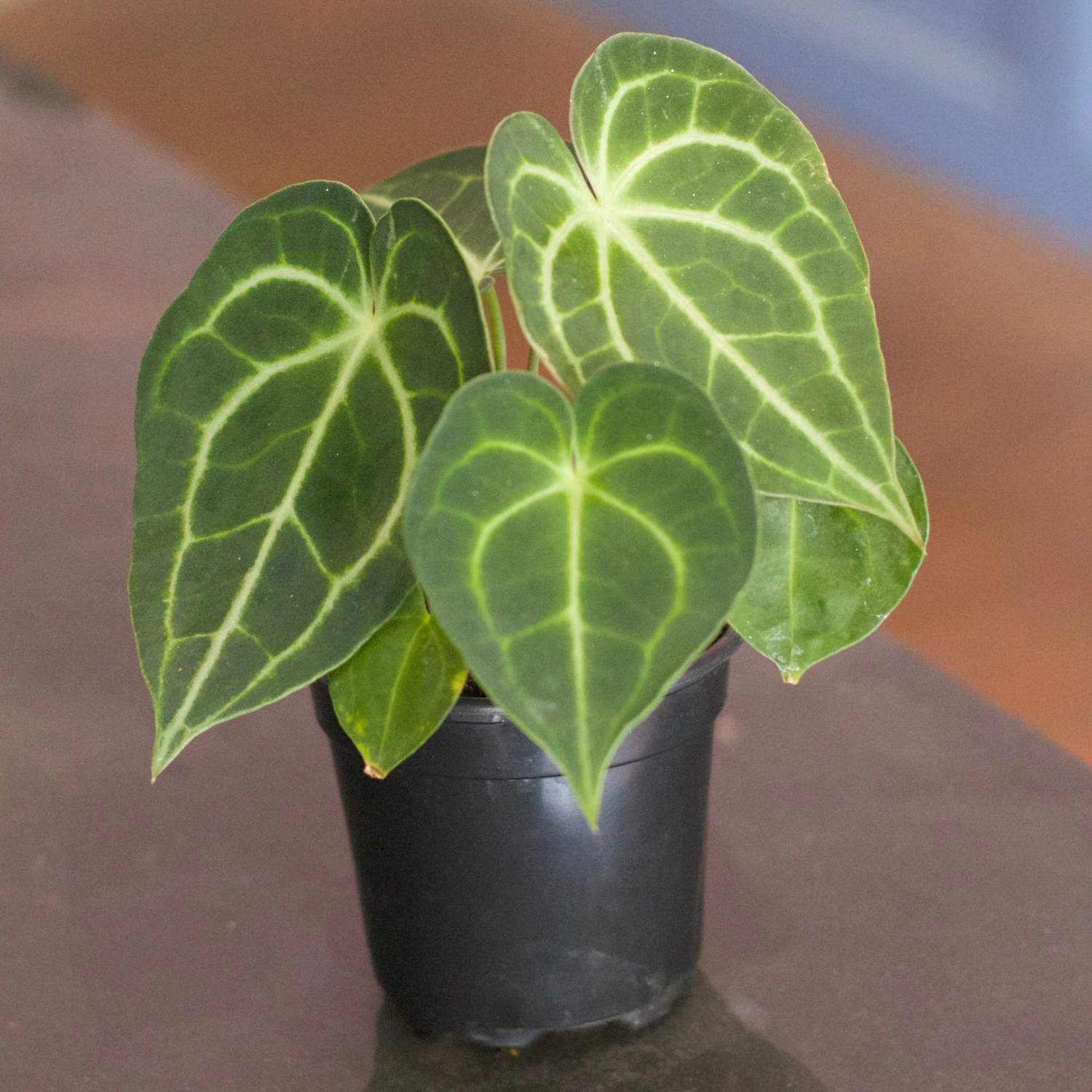
Anthuriums are the undeniable queens of texture and color in the tropical plant world. Whether you choose the classic flowering Anthuriums, or a velvet-leafed foliage variety, these plants are the ultimate way to make a statement in your home.
At Over Grown, we adore Anthuriums for their sculptural looks and their continuous blooming cycles. Given the right balance of light and moisture, they are reliable growers that offer deep green foliage and year-round color.
Anthurium Lighting
Coming from the rainforests of Central and South America, Anthuriums love bright environments but are easily burned by the direct glare of the sun.
- Ideal light conditions: Bright, indirect light is essential for keeping Anthuriums happy. An east-facing window or a spot a few feet back from a south or west-facing window provides the perfect filtered light.
- The blooms: If your Anthurium isn't receiving enough light, it will stop producing its colorful flowers and growth will slow down.
- Avoid: Direct afternoon sun, which will quickly bleach the glossy sheen of the foliage and leave scorched, brown patches.
- Signs of improper light: Pale, yellowish leaves often mean the plant is getting too much light, while a lack of flowers and long, leggy stems mean it’s craving a brighter spot.
Anthurium Watering
Anthuriums are epiphytic in nature, meaning they often grow on trees rather than in deep soil, so their roots need plenty of oxygen and a balance of moisture.
- How often to water: Water thoroughly when the top 50% of the soil feels dry. Make sure the soil is getting completely watered, until water comes out of the drainage holes.
- Check the soil: Use your finger to check the moisture depth. Anthuriums like to stay lightly hydrated but will quickly decline if their roots are trapped in dense, soggy soil.
- Avoid: Letting the plant sit in a saucer of standing water, which is a fast way to root rot.
- Signs of improper watering: Drooping leaves can mean the plant is either thirsty or overwatered. If the leaves feel limp and the soil is wet, hold off on watering.
Anthurium Soil and Fertilization
Because of their wild, epiphytic roots, a heavy, standard potting soil will suffocate an Anthurium. They require an incredibly chunky, airy mix.
- Potting medium: A specialized, coarse blend is a must. We recommend and use Rosy Aroid Soil Blend (available in-store) to create an open, breathable environment for the plant's roots. Learn more in our blog, ‘All About Rosy.’
- Fertilizing: This is important, especially if you want blooms! Feed your Anthurium with a balanced liquid fertilizer every 4-6 weeks during the spring and summer. Our liquid fertilizer drops are an easy, gentle way to keep them nourished.
Anthurium Humidity & Leaf Care
High humidity is the ultimate secret to keeping Anthuriums looking pristine and vibrant.
- Methods to increase humidity: They thrive best in humidity levels of 50% or higher. Running a nearby humidifier or grouping your Anthurium with other plants will keep the leaf margins smooth and prevent them from drying out. For more tips on increasing humidity, check out our blog, 'Humidity 101.'
- Clean the foliage: Those broad, heart-shaped leaves are excellent dust catchers. Gently wipe them down with a soft, damp cloth every few weeks to maintain their famous shine and keep the plant breathing easily.
Anthurium Pests and Treatment
The high-humidity environment that Anthuriums love can occasionally attract a few common indoor pests if air circulation is low.
- Common Pests: Keep a sharp eye out for Mealybugs (white, cottony clusters) hiding in the crevices where the stems meet, or Spider Mites on the undersides of the leaves.
- Treatment: Isolate the plant immediately and wipe down the foliage. We recommend a thorough application of our Plant Protect Spray to clear out any hidden pests. For more identification tips, visit our blog, ‘Identifying & Treating Houseplant Pests.’
Anthuriums are very expressive and will give you clear visual cues whenever their care routine needs a slight adjustment.
Flowers Turning Green
- Causes: This is actually a natural part of the plant's life cycle! Individual blooms will eventually fade to green and die off as they age so the plant can focus on new growth.
- Solutions: Snip the faded flower stems off near the base with clean scissors to keep the plant tidy and encourage fresh blooms.
Brown, Crispy Leaf Tips
- Causes: Usually a sign of low humidity or inconsistent watering.
- Solutions: Boost the humidity around the plant with a humidifier and ensure you are soaking the soil completely as soon as the top half dries out.
Yellowing Leaves
- Causes: Frequent yellowing of the leaves is a classic indicator of overwatering or compacted soil that isn't draining properly.
- Solutions: Check the drainage holes of your pot, allow the soil to dry out more between waterings, and ensure your soil mix is chunky and loose.
How to keep your tropical queen thriving:
- Lighting: Bright, indirect light keeps the plant thriving.
- Watering: Allow the top half of the soil to dry out completely before soaking.
- Soil: Use a chunky, well-aerated mix. Never dense or heavy soil.
Stop by the shop to see our stunning current selection of Anthuriums and let our team help you pick the perfect vivid addition for your home.
We hope this guide helps your Anthuriums stay lush and colorful! For more expert advice and community updates, sign up for our newsletter below.